


Phragmites australis, Goosegrass, and Imperata cylindrica are common weeds in crop fields. Phragmites australis and Imperata cylindrica, in particular, have highly developed rhizomes, making them difficult to kill with ordinary herbicides, making them among the most challenging weeds to eradicate. Today, we'll introduce a simple formula for controlling Phragmites australis, Goosegrass, Imperata cylindrica, and other malignant weeds, which can completely eradicate them.
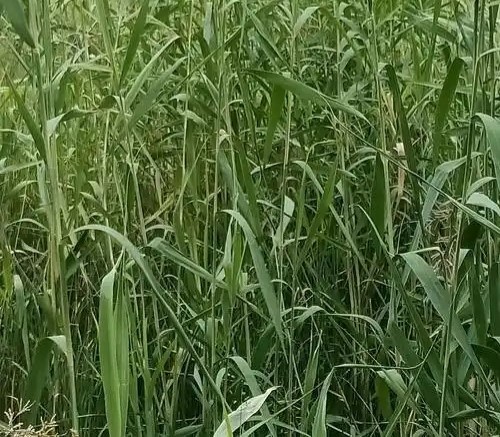
Occurrence Characteristics of Phragmites australis
Phragmites australis is a perennial grass weed that can thrive in both aquatic and drought environments. It grows extensively in ponds, ditches, and various crop fields, and has highly developed rhizomes. Reproducing primarily through rhizomes, it tolerates heat but not cold, making it a major field weed in summer and autumn. Its robust rhizomes and strong resistance to pesticides make it one of the most difficult weeds to eradicate in crop fields.
Occurrence Characteristics of Imperata
Imperata, commonly known as Imperata root, is a perennial grass weed that primarily grows along roadsides, hillsides, ditches, grasslands, and crop fields. It primarily reproduces by underground rhizomes, and even after drying, the roots remain viable when buried in the soil, making eradication extremely labor-intensive and a persistent weed.
Herbicide Selection
Phragmites australis and Imperata cylindrica are both perennial, malignant weeds. Manual eradication is labor-intensive and ineffective, making complete eradication difficult. Chemical weed control offers advantages such as high efficiency, good results, and thorough weed control, and is currently widely used in production. Experiments have shown that the combination of glyphosate and halpyrazo-ethyl is highly effective against Phragmites australis and Imperata cylindrica.
Glyphosate is also a lethal herbicide with excellent systemic transport, allowing it to be transported through stems and leaves to the roots, where it kills them all. Combining glufosinate and glyphosate in a specific ratio offers significant synergy, overcoming their respective shortcomings. This combination of glufosinate and haloxyfop-ethyl offers a wider weed control range, more rapid and thorough weed elimination, and significantly reduces the price.
Glyphosate combined with haloxyfop-ethyl possesses excellent systemic transport. After being absorbed by stems and leaves, the agent is transported from these stems and leaves to various parts of the underground rhizomes, killing both above-ground stems and rhizomes simultaneously. Furthermore, it can also control malignant weeds such as wild oats, bluegrass, foxtail grass, bermudagrass, and cyperus rotundus. Its effectiveness can last for over 60 days, significantly reducing labor input.
Glyphosate requires a large amount of liquid to reach the underground rhizomes of weeds to be effective. This requires the weeds to have a large number of leaves. If the weeds are small and photosynthetic activity is weak before application, nutrients stored in the roots will be transferred upwards from the bottom. At this time, the amount of liquid delivered to the roots will be minimal, making it ineffective in killing the weeds. However, in the middle and late stages of weed growth, photosynthesis is strong, and photosynthetic products are transferred downwards from the top, making glyphosate most effective. Therefore, choosing the optimal application time is crucial for using glyphosate.
Instructions
During the peak growth period of Phragmites australis, Goosegrass, and Imperata cylindrica, apply 300-500 ml of 30% ammonium glyphosate saline solution plus 30-45 ml of 10.8% high-efficiency halpyr-methyl emulsifiable concentrate per mu (approximately 1.5 acres) of water. Evenly spray the solution. This will completely kill Phragmites australis, Goosegrass, and Imperata cylindrica within 10-15 days. It can also control wild oats, bluegrass, bermudagrass, and foxtail grass.


