

In the realm of modern agriculture, herbicides play a pivotal role in ensuring crop health and maximizing yields. As climate change continues to reshape environmental conditions, one pressing question has emerged among farmers and agricultural professionals: Are there any herbicides that are heat - tolerant? As a dedicated herbicide supplier, I am constantly engaged in exploring and providing solutions to meet the evolving needs of the agricultural industry. In this blog, I will delve into the topic of heat - tolerant herbicides, discussing the challenges, available options, and the implications for the future of farming.
The Challenge of Heat on Herbicides
High temperatures can have a significant impact on the efficacy and performance of herbicides. When exposed to extreme heat, several things can happen. Firstly, the volatility of herbicides may increase. Volatile herbicides can evaporate quickly, leading to reduced contact with the target weeds and potential drift, which can damage non - target crops. Secondly, heat can affect the absorption and translocation of herbicides within the weed plants. High temperatures may disrupt the normal physiological processes of weeds, making it more difficult for herbicides to be taken up and distributed effectively throughout the plant.
Moreover, heat stress can also cause changes in the weed's metabolism. Some weeds may enter a state of dormancy or reduced growth under high - temperature conditions, which can make them less susceptible to herbicide action. This means that even if a herbicide is applied, it may not achieve the desired level of weed control, leading to yield losses for farmers.
Heat - Tolerant Herbicide Options
Fomesafen
Herbicide Fomesafen 250g/l SL Weedicide For Soybean Field is one herbicide that has shown some degree of heat tolerance. Fomesafen is a contact herbicide that is commonly used in soybean fields to control a wide range of broadleaf weeds. It works by inhibiting the enzyme protoporphyrinogen oxidase (PPO), which is essential for chlorophyll synthesis in plants.
Under high - temperature conditions, Fomesafen has been found to maintain its efficacy. Its mode of action is relatively stable, and it can still effectively damage the cell membranes of weeds, leading to their death. Additionally, Fomesafen has a relatively low volatility compared to some other herbicides, which means that it is less likely to evaporate quickly in hot weather, ensuring better contact with the target weeds.
Glufosinate Ammonium
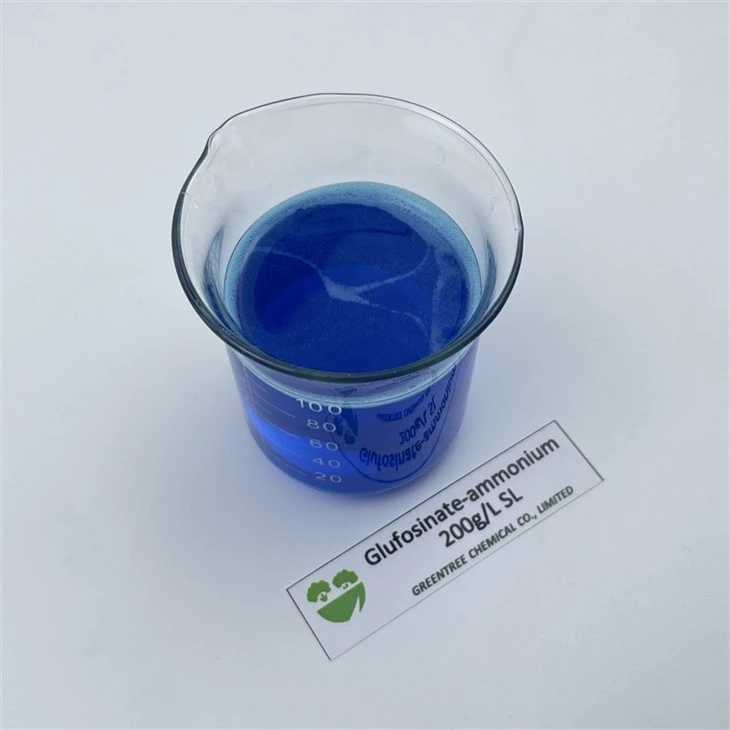
Glufosinate Ammonium 200 G/l SL Agrochemical Herbicide is another herbicide that demonstrates heat - tolerant properties. Glufosinate ammonium is a non - selective herbicide that acts by inhibiting the enzyme glutamine synthetase, which is involved in nitrogen metabolism in plants.
In high - temperature environments, glufosinate ammonium remains effective because its mode of action is not significantly affected by heat. It can quickly penetrate the leaves of weeds and disrupt their nitrogen metabolism, leading to the accumulation of toxic ammonia in the plant cells. This results in rapid wilting and death of the weeds. Moreover, glufosinate ammonium has a relatively short residual activity in the soil, which is beneficial in hot climates where soil conditions can change rapidly.
Triasulfuron
CAS 82097 - 50 - 5 Triasulfuron 75% Wdg Herbicide Weedicide is a sulfonylurea herbicide that has also shown heat - tolerant characteristics. Triasulfuron works by inhibiting the enzyme acetolactate synthase (ALS), which is involved in the synthesis of branched - chain amino acids in plants.
In high - temperature situations, Triasulfuron can still effectively bind to the ALS enzyme in weeds, preventing the synthesis of essential amino acids and ultimately leading to the death of the weeds. It has a relatively long - lasting effect on weed control, which is important in hot regions where weed growth can be continuous throughout the growing season.
Factors Affecting Heat Tolerance of Herbicides
While the above - mentioned herbicides have shown heat - tolerant properties, it is important to note that several factors can influence their performance under high - temperature conditions.
Application Rate
The application rate of herbicides is crucial. In hot weather, it may be necessary to adjust the application rate to ensure effective weed control. Higher temperatures can sometimes reduce the efficacy of herbicides, so a slightly higher application rate may be required. However, this should be done carefully to avoid over - application, which can lead to environmental pollution and potential damage to crops.

Application Time
The time of application also matters. Applying herbicides during the cooler parts of the day, such as early morning or late evening, can help reduce the impact of heat. This allows the herbicide to be absorbed by the weeds before the temperature rises too high, increasing the chances of effective weed control.
Adjuvants
The use of adjuvants can enhance the heat tolerance of herbicides. Adjuvants are substances that are added to herbicide formulations to improve their performance. For example, some adjuvants can reduce the volatility of herbicides, increase their adhesion to the weed leaves, and enhance their absorption and translocation within the plants. This can help herbicides maintain their efficacy under high - temperature conditions.
The Future of Heat - Tolerant Herbicides
As the global climate continues to warm, the demand for heat - tolerant herbicides is likely to increase. The agricultural industry will need more effective and reliable solutions to combat weeds in high - temperature environments.
Research and development efforts are underway to discover and develop new heat - tolerant herbicides. Scientists are exploring new modes of action and chemical structures that can withstand the challenges posed by heat. Additionally, there is a growing interest in developing herbicide formulations that are more environmentally friendly and have a lower impact on non - target organisms.
In addition to developing new herbicides, there is also a need for better education and training for farmers. Farmers need to be aware of the factors that affect herbicide performance in hot weather and how to adjust their application practices accordingly. This includes proper application rates, timing, and the use of adjuvants.
Conclusion
In conclusion, there are indeed herbicides that are heat - tolerant, such as Fomesafen, Glufosinate Ammonium, and Triasulfuron. These herbicides offer effective solutions for weed control in high - temperature environments. However, their performance can be influenced by various factors, and proper application practices are essential to ensure their efficacy.
As a herbicide supplier, I am committed to providing high - quality heat - tolerant herbicides and supporting farmers with the knowledge and resources they need to achieve successful weed control. If you are interested in learning more about our heat - tolerant herbicide products or have any questions regarding herbicide application in hot climates, please feel free to contact us for procurement and further discussions.
References
- Shaner, D. L. (2014). Herbicide Handbook. Weed Science Society of America.
- Grossmann, K., & Ehrhardt, T. (2007). Mode of action of herbicides. In Herbicide Resistance and World Grains (pp. 1 - 22). Springer.
- Hatzios, K. K., & Penner, D. (Eds.). (1985). Herbicide Metabolism in Higher Plants. CRC Press.


