Can Kinetin Cytokinin be used in plant tissue engineering?
In the realm of modern agriculture and horticulture, plant tissue engineering has emerged as a revolutionary field, offering innovative solutions for plant propagation, improvement, and conservation. Among the key players in this domain are plant growth regulators, substances that can significantly influence plant development and differentiation. Kinetin, a type of cytokinin, is one such substance that has attracted considerable attention due to its potential applications in plant tissue engineering. As a leading supplier of kinetin cytokinin, I am excited to delve into the possibilities of using this compound in plant tissue engineering.
Understanding Kinetin Cytokinin
Cytokinins are a class of plant hormones that play crucial roles in various physiological processes, including cell division, shoot initiation, leaf expansion, and apical dominance. Kinetin, first discovered in 1955, was the first cytokinin to be isolated and identified. It is a synthetic cytokinin that mimics the effects of natural cytokinins in plants. Kinetin promotes cell division and differentiation, delays senescence (aging) of plant tissues, and enhances the growth and development of shoots and roots.
The chemical structure of kinetin allows it to interact with specific receptors in plant cells, triggering a cascade of biochemical reactions that ultimately lead to changes in gene expression and cellular behavior. This ability to modulate plant growth and development makes kinetin a valuable tool in plant tissue engineering.
Applications of Kinetin in Plant Tissue Engineering
1. Shoot Multiplication
One of the primary applications of kinetin in plant tissue engineering is shoot multiplication. In tissue culture, small pieces of plant tissue, such as explants from leaves, stems, or meristems, are placed on a nutrient medium containing various growth regulators, including kinetin. The presence of kinetin stimulates cell division in the explant, leading to the formation of multiple shoots. This technique is widely used for the rapid propagation of valuable plant species, such as orchids, roses, and fruit trees.
For example, in the propagation of orchids, kinetin can be used to induce the formation of protocorms (small, spherical structures) from seed embryos. These protocorms can then be multiplied in culture and developed into plantlets, which can be transplanted to soil. This method allows for the large-scale production of high-quality orchid plants in a relatively short period.
2. Callus Induction and Differentiation
Callus is an undifferentiated mass of cells that can be induced from plant tissues by culturing them on a medium containing appropriate growth regulators, including kinetin. Kinetin, in combination with auxins (another class of plant hormones), can promote the formation of callus from explants. Once callus is formed, the ratio of kinetin to auxin can be adjusted to stimulate the differentiation of callus into shoots, roots, or other plant organs.
This process is particularly useful for the genetic transformation of plants. By introducing foreign genes into callus cells and then inducing their differentiation into plants, researchers can create transgenic plants with desired traits, such as disease resistance, herbicide tolerance, or improved nutritional value.
3. Somatic Embryogenesis
Somatic embryogenesis is a process by which somatic (non-reproductive) cells of a plant are induced to form embryos, which can then develop into whole plants. Kinetin can play a crucial role in somatic embryogenesis by promoting the initiation and development of somatic embryos. In some plant species, kinetin can be used to enhance the frequency of somatic embryo formation and improve the quality of the resulting embryos.
Somatic embryogenesis has several advantages over traditional methods of plant propagation, including the ability to produce large numbers of genetically identical plants, the potential for cryopreservation of somatic embryos, and the possibility of using somatic embryos as a source of plant material for genetic transformation.
Advantages of Using Kinetin Cytokinin in Plant Tissue Engineering
1. Increased Propagation Efficiency
By promoting shoot multiplication, callus induction, and somatic embryogenesis, kinetin can significantly increase the efficiency of plant propagation in tissue culture. This allows for the rapid production of large numbers of plants, which is particularly important for the conservation of rare and endangered plant species, as well as for the commercial production of high-value crops.
2. Improved Plant Quality
Kinetin can enhance the quality of plants produced in tissue culture by promoting the development of healthy shoots and roots, delaying senescence, and increasing the resistance of plants to environmental stresses. This results in plants that are more vigorous, have better growth potential, and are more likely to survive and thrive after transplantation to soil.
3. Genetic Manipulation
As mentioned earlier, kinetin can be used in combination with other techniques to facilitate the genetic manipulation of plants. This opens up new possibilities for the development of genetically modified plants with improved traits, such as increased yield, enhanced nutritional value, and resistance to pests and diseases.
Other Cytokinin-Based Plant Growth Regulators
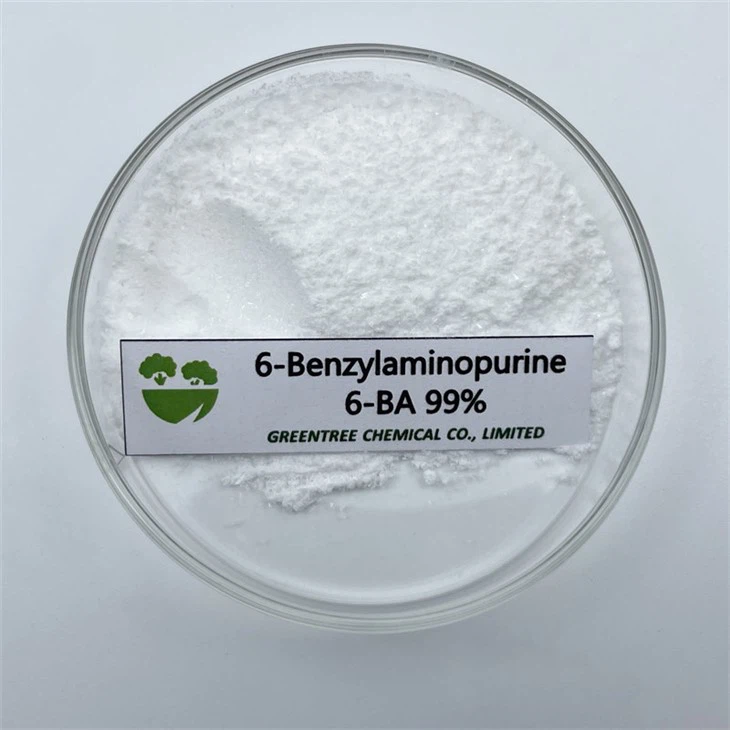
In addition to kinetin, there are other cytokinin-based plant growth regulators that are commonly used in plant tissue engineering. For example, CAS NO. 1214-39-7 6-BA 6-Benzylaminopurine 99% Plant Growth Regulator is a widely used synthetic cytokinin that has similar effects to kinetin in promoting shoot multiplication and callus induction. Another important cytokinin-based regulator is C12H10CLN3O Cppu 2% Sp Soluble Powder Plant Growth Regulator For Fruit, which is used to improve fruit set, increase fruit size, and enhance the quality of fruits. Forchlorfenuron Cppu 2% Sp Plant Hormone Improve The Amino Acid Content is also a cytokinin-like plant growth regulator that can be used to enhance the growth and development of plants.
Challenges and Considerations
While kinetin cytokinin has many potential applications in plant tissue engineering, there are also some challenges and considerations that need to be taken into account. One of the main challenges is the optimization of growth regulator concentrations and ratios. Different plant species and explant types may require different concentrations of kinetin and other growth regulators to achieve the desired effects. Therefore, careful experimentation and optimization are necessary to determine the optimal culture conditions for each specific application.
Another consideration is the potential for unintended effects. High concentrations of kinetin or other growth regulators can sometimes lead to abnormal growth, such as excessive branching, stunted growth, or the formation of callus with poor differentiation potential. Therefore, it is important to use the appropriate concentrations of growth regulators and to monitor the growth and development of plants closely during tissue culture.
Conclusion
In conclusion, kinetin cytokinin has significant potential for use in plant tissue engineering. Its ability to promote cell division, shoot multiplication, callus induction, and somatic embryogenesis makes it a valuable tool for the rapid propagation, improvement, and conservation of plants. However, the successful application of kinetin in plant tissue engineering requires careful optimization of culture conditions and consideration of potential challenges.

As a supplier of kinetin cytokinin, we are committed to providing high-quality products and technical support to our customers. If you are interested in using kinetin or other cytokinin-based plant growth regulators in your plant tissue engineering projects, please feel free to contact us to discuss your requirements and to initiate a procurement negotiation. We look forward to working with you to achieve your goals in plant tissue engineering.
References
- Murashige, T., & Skoog, F. (1962). A revised medium for rapid growth and bio assays with tobacco tissue cultures. Physiologia Plantarum, 15(3), 473-497.
- Skoog, F., & Miller, C. O. (1957). Chemical regulation of growth and organ formation in plant tissues cultured in vitro. Symposia of the Society for Experimental Biology, 11, 118-131.
- Zhang, D., & Ervin, E. H. (2004). Effects of benzyladenine and trinexapac-ethyl on growth and quality of creeping bentgrass. Crop Science, 44(6), 2113-2120.