

Indole butyric acid (IBA) is a well - known plant growth regulator that has been widely used in agriculture and horticulture. As a supplier of indole butyric acid, I often receive inquiries about its solubility, especially in organic solvents. This blog aims to delve into the solubility of indole butyric acid in organic solvents and provide some useful information for those who are interested in using this product.

Chemical Properties of Indole Butyric Acid
Indole butyric acid, with the chemical formula C₁₂H₁₃NO₂ and CAS NO. 133 - 32 - 4 C12H13NO2 Crop Growth Regulator Iba Indole - 3 - Butyric Acid 98%Tc, is a synthetic auxin. Auxins are a class of plant hormones that play crucial roles in various plant growth processes, such as cell elongation, root initiation, and apical dominance. IBA is particularly effective in promoting root development in cuttings, which makes it a popular choice for plant propagation.
The structure of indole butyric acid consists of an indole ring attached to a butyric acid side - chain. This structure gives IBA certain physical and chemical properties, including its solubility behavior.
Solubility in Organic Solvents
- Solubility in Ethanol
Ethanol is a commonly used organic solvent in the laboratory and in the formulation of plant growth regulators. Indole butyric acid is highly soluble in ethanol. The hydroxyl group in ethanol can form hydrogen bonds with the carboxyl group of IBA, facilitating its dissolution. This property makes ethanol a suitable solvent for preparing IBA solutions for plant treatment. For example, a 1000 ppm (parts per million) IBA solution can be easily prepared by dissolving an appropriate amount of IBA in ethanol. This solution can then be used for dipping plant cuttings to promote root growth. - Solubility in Methanol
Similar to ethanol, methanol is also a good solvent for indole butyric acid. Methanol has a smaller molecular size and a higher polarity compared to ethanol, which allows it to interact well with IBA. The solubility of IBA in methanol is also relatively high, and it can be used to prepare concentrated IBA solutions. However, methanol is more toxic than ethanol, so proper safety precautions should be taken when using it. - Solubility in Acetone
Acetone is another organic solvent in which indole butyric acid is soluble. Acetone has a carbonyl group that can interact with the indole ring and the carboxyl group of IBA through dipole - dipole interactions. The solubility of IBA in acetone is sufficient for most applications. For instance, in some industrial formulations, acetone can be used as a solvent to dissolve IBA and other additives to form a homogeneous solution. - Solubility in Diethyl Ether
Diethyl ether is a non - polar organic solvent. Although indole butyric acid has a polar carboxyl group, it also has a relatively non - polar indole ring. Diethyl ether can dissolve IBA to a certain extent. However, the solubility is lower compared to polar solvents like ethanol and methanol. The non - polar nature of diethyl ether limits its ability to interact with the polar carboxyl group of IBA, but the non - polar indole ring can still have some affinity for the ether.
Factors Affecting Solubility
- Temperature
Temperature has a significant impact on the solubility of indole butyric acid in organic solvents. Generally, as the temperature increases, the solubility of IBA in organic solvents also increases. This is because higher temperatures provide more energy for the solvent molecules to break the intermolecular forces between IBA molecules and to surround and solvate them. For example, if you are having trouble dissolving IBA in ethanol at room temperature, gently heating the solution can enhance the solubility. - Purity of IBA
The purity of indole butyric acid can also affect its solubility. Impurities in IBA can interfere with the dissolution process. High - purity IBA is more likely to dissolve completely in organic solvents compared to impure samples. As a supplier, we ensure that our IBA products have high purity levels to guarantee good solubility and performance. - Concentration of the Solution
The concentration of the IBA solution also plays a role in solubility. At low concentrations, IBA can dissolve easily in organic solvents. However, as the concentration increases, the solubility limit may be reached, and precipitation may occur. It is important to follow the recommended concentration ranges when preparing IBA solutions to avoid solubility issues.
Applications of IBA in Organic Solvent Solutions
- Plant Propagation
As mentioned earlier, IBA is widely used in plant propagation. By dissolving IBA in organic solvents such as ethanol, it can be applied to plant cuttings to promote root development. The organic solvent helps the IBA to penetrate the plant tissue more effectively, allowing it to exert its growth - promoting effects. For example, in the propagation of ornamental plants, IBA solutions are often used to increase the success rate of rooting. - Research and Development
In plant science research, IBA solutions in organic solvents are used to study the effects of auxins on plant growth and development. Researchers can prepare different concentrations of IBA solutions to investigate the dose - response relationship of plants to IBA. The solubility of IBA in organic solvents allows for precise control of the IBA concentration in the experimental solutions.
Comparison with Other Plant Growth Regulators
- Indole - 3 - Acetic Acid (IAA)
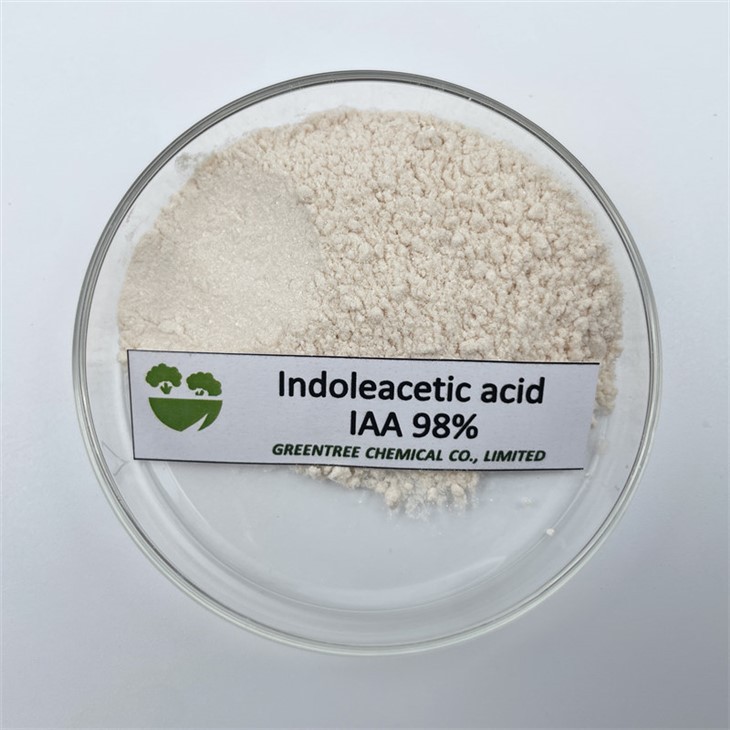
CAS 87 - 51 - 4 Iaa Indole - 3 - Acetic Acid 98 Tc Agricultural Plant Growth Promotion is another important auxin. Similar to IBA, IAA is also soluble in organic solvents such as ethanol and methanol. However, IAA is more unstable compared to IBA, especially in the presence of light and oxygen. IBA is often preferred in applications where long - term stability is required. - 1 - Naphthylacetamide (1 - NAD)
CAS 86 - 86 - 2 Plant Hormone 1 - Nad 1 - Naphthylacetamide 98TC Supplier C12H11NO is also a plant growth regulator. It has different solubility characteristics compared to IBA. 1 - NAD is less soluble in some polar organic solvents, and its solubility behavior is influenced by its chemical structure, which is different from that of IBA.
Conclusion
In conclusion, indole butyric acid is soluble in a variety of organic solvents, including ethanol, methanol, acetone, and diethyl ether. The solubility is affected by factors such as temperature, purity, and concentration. As a supplier of indole butyric acid, we understand the importance of solubility in the application of this product. Our high - quality IBA products are designed to have good solubility in organic solvents, ensuring their effectiveness in plant growth regulation.
If you are interested in purchasing indole butyric acid or have any questions about its solubility or application, please feel free to contact us for further discussion and procurement negotiation. We are committed to providing you with the best products and services.
References
- Davies, P. J. (Ed.). (2013). Plant Hormones: Biosynthesis, Signal Transduction, Action! Springer Science & Business Media.
- Taiz, L., & Zeiger, E. (2010). Plant Physiology. Sinauer Associates.


