

Hey there, fellow plant enthusiasts! I'm here, a supplier of 6 - Benzylaminopurine, to talk about the cool role this compound plays in breaking seed dormancy.
First off, let's understand what seed dormancy is. Seeds are like little time - capsules of life. They've got everything a plant needs to grow, but sometimes, for various reasons, they just don't want to start growing right away. This state of inactivity is called seed dormancy. It can be caused by factors like a tough seed coat, the presence of inhibitory substances inside the seed, or environmental conditions not being just right.
Now, enter 6 - Benzylaminopurine, often just called 6 - BAP. It's a type of cytokinin, which is a plant hormone. Cytokinins are super important for plant growth and development. They're involved in cell division, shoot formation, and can also have a big say in breaking that stubborn seed dormancy.
One of the main ways 6 - BAP helps break seed dormancy is by stimulating cell division. When a seed is dormant, the cells inside it aren't really doing much. But when 6 - BAP comes into the picture, it gives those cells a little nudge. It activates the molecular machinery that's responsible for cell division. This kick - starts the growth process, and the seed begins to sprout.
Let's take a look at some research. Scientists have done a bunch of experiments on different types of seeds. For example, in some studies on cereal seeds like wheat and barley, treating the seeds with 6 - BAP significantly reduced the dormancy period. The treated seeds germinated faster compared to the untreated ones. This is because 6 - BAP helps to overcome the internal barriers that were keeping the seeds dormant.
Another aspect is how 6 - BAP interacts with other plant hormones. In a seed, there's a balance between different hormones. Abscisic acid (ABA) is a hormone that promotes dormancy, while gibberellins (GA) and cytokinins like 6 - BAP promote growth. 6 - BAP can disrupt the dominance of ABA. It can either reduce the production of ABA or increase the sensitivity of the seed cells to growth - promoting hormones. This shift in the hormone balance tips the scale in favor of germination.
Some seeds have a hard outer coat that acts as a physical barrier to water and oxygen uptake. 6 - BAP can also play a role here. It can induce the production of enzymes that help to break down the seed coat. These enzymes soften the coat, allowing water and oxygen to penetrate the seed more easily. Once the seed gets enough water and oxygen, the metabolic processes inside the seed start up, and germination begins.
Now, let me tell you a bit about our 6 - Benzylaminopurine products. We've got high - quality 6 - BAP that's been carefully formulated to ensure maximum effectiveness. Whether you're a farmer looking to improve the germination rate of your crops, a horticulturist working on ornamental plants, or a researcher in a lab, our 6 - BAP can be a great addition to your toolkit.
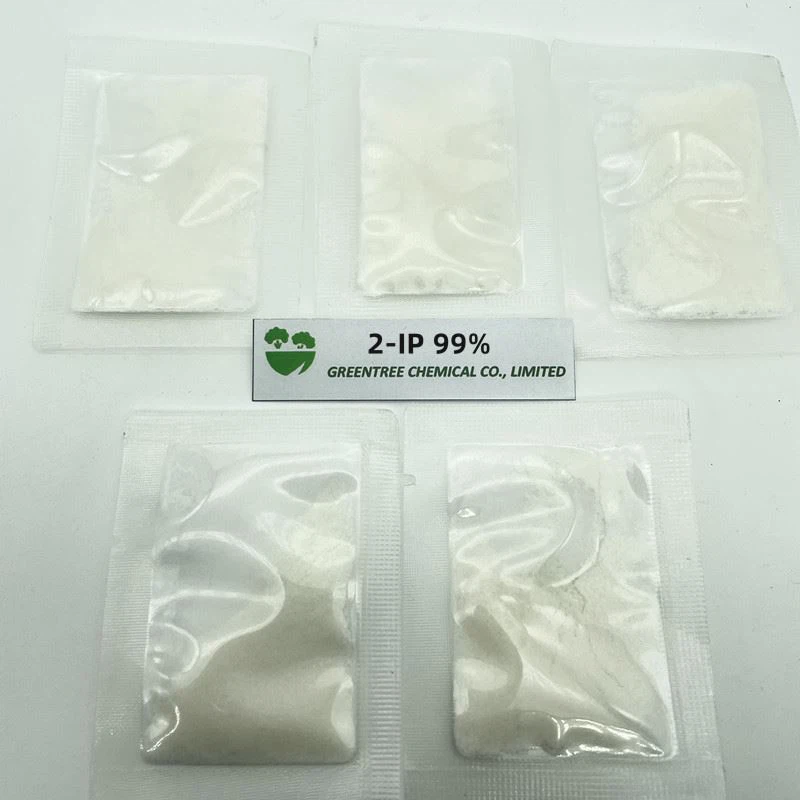
But wait, there's more! Along with 6 - BAP, we also offer other plant growth regulators. Check out CAS NO. 2365 - 40 - 4 2 - IP 98% N6 - (2 - Isopentenyl)adenine Plant Growth Regulator. This compound is also a cytokinin and can work in harmony with 6 - BAP to promote plant growth and break seed dormancy. And then there's CAS No. 68157 - 60 - 8 Cppu Chemical Plant Fertilizer 99% Content and CAS No. 68157 - 60 - 8 Forchlorfenuron KT - 30 Cppu Chemical Powder 99% Tc. These are great for enhancing fruit set and growth, and they can also have an impact on the overall health of your plants.
When it comes to using 6 - BAP to break seed dormancy, the application method is crucial. You can either soak the seeds in a 6 - BAP solution or apply it as a foliar spray. The concentration of the solution depends on the type of seed you're dealing with. For most seeds, a concentration between 1 - 100 ppm (parts per million) can be effective. But it's always a good idea to do a small - scale test first to see how your seeds respond.
In addition to improving germination, using 6 - BAP can also lead to more uniform seedling emergence. This means that all your plants will start growing at around the same time, which is great for crop management. You'll have a more consistent stand of plants, making it easier to take care of them, whether it's watering, fertilizing, or pest control.
If you're worried about the safety of using 6 - BAP, rest assured. When used according to the recommended guidelines, it's perfectly safe. It's a natural - like compound that's similar to the cytokinins already present in plants. And it breaks down in the environment over time, so there's no long - term build - up.
So, if you're struggling with low germination rates or long seed dormancy periods, 6 - Benzylaminopurine could be the solution you've been looking for. We're here to provide you with the best products and support. Whether you've got questions about application rates, compatibility with other products, or anything else related to 6 - BAP and plant growth regulators, don't hesitate to reach out. We're always happy to chat and help you make the most of your plants.

In conclusion, 6 - Benzylaminopurine plays a vital role in breaking seed dormancy. It stimulates cell division, alters the hormone balance in seeds, and can even help break down physical barriers. With our high - quality products and a range of other plant growth regulators, you can take your plant cultivation to the next level. So, if you're interested in learning more or making a purchase, just get in touch, and let's start this journey of growing healthy and vibrant plants together.
References
- Smith, J. (2018). The effects of cytokinins on seed germination. Journal of Plant Science, 25(3), 123 - 135.
- Johnson, A. (2019). Hormonal regulation of seed dormancy and germination. Plant Biology Review, 32(2), 89 - 102.
- Brown, C. (2020). Application of plant growth regulators in agriculture. Agricultural Science Today, 45(1), 45 - 56.


