Peach brown rot, also known as gray mold, gray rot and gray star disease, is caused by the ascomycete fungus (Scle_rotinia laxa Aderh et Ruhl). It mainly damages fruits, but can also damage flowers, leaves and new shoots.
1. Occurrence pattern
The pathogen mainly overwinters on dead fruits and diseased branches. From April to May, the pathogen produces a large number of conidia in the overwintering parts. The spores are spread by wind, rain and air currents, and invade through wounds and lenticels. Wounds caused by heartworms and leafrollers are conducive to bacterial infection. Rainy conditions are an important trigger for the disease. Overcrowded planting, poor pruning, closed orchards, and poor ventilation and light transmission are all conducive to the disease.
2.Characteristics and identification methods
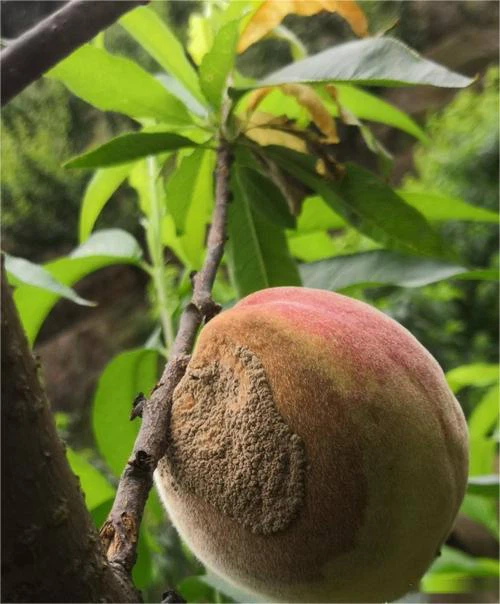
The pathogenic fungus is an ascomycete, and the brown mold layer is the asexual propagule of the fungus, which mainly infects peach tree fruits. Fruits can be affected from the young fruit stage, and the disease is more common in the near and mature stages. In the early stage of the disease, brown round lesions appear on the fruit, indicating the growth of a brown mold layer, which soon expands to the entire fruit. The diseased fruits fall off easily, and may also lose water and shrink into dark brown stiff fruits hanging from the branches.
After being damaged, the flower organs and young leaves turn brown and droop, and may remain on the branches without falling off for a long time. The new shoots are affected and form oblong ulcers with purple-brown edges and a slight depression in the middle. Glue begins to flow. Later, the cortex rots and the upper part dies when the lesions surround the branch.
3. Use pesticides
(1)Procymidide
Dosage form: 50% WP.
Control period: Apply pesticide before and after flowering period.
Usage method: Use 15 grams of 50% Sukelin wettable powder, add 15 kilograms of water, dilute it to a 1000-fold solution, stir and spray evenly.
Precautions:
① The medicinal solution should be prepared and used immediately. The prepared medicinal solution should not be left for a long time to avoid affecting the efficacy of the medicine.
② This agent cannot be mixed with alkaline pesticides; it cannot be mixed with dicofol and malathion.
③This agent cannot be used alone for a long time and should be stored in a cool and dry place.
(2) Iprodione
Dosage form: 50% WP.
Control period: Apply pesticide before and after flowering period.
Usage method: Use 15 grams of 50% parahydantoin wettable powder, mix with 15 kilograms of water, dilute it to a 1000-fold solution, stir and spray evenly.
Precautions:
① This agent cannot be mixed with strongly alkaline and acidic pesticides such as lime sulfur mixture and Bordeaux mixture.
② This agent cannot be mixed with or used in rotation with fungicides that have the same mode of action as promethain (Sukelin, Nongliling, etc.).
③ This agent is harmless to beneficial insects such as beneficial fungi (Trichoderma spp.), bees, aphrodisiac mites, and callipids, as well as plant seiid mites. It can effectively prevent and control bacteria that have developed resistance to benzimidazole systemic fungicides.
(3)Chlorothalonil
Dosage form: 75% WP.
Control period: Spray pesticides about 20 days before fruit harvest.
Usage method: Use 15 grams of 75% chlorothalonil wettable powder, add 15 kilograms of water, dilute it to a 1000-fold solution, stir and spray evenly.
Precautions:
① This agent has an irritating effect on human skin and eyes. A few people have allergic reactions, which generally cause mild contact dermatitis.
② This agent is poisonous to fish. When applying the agent, it must be kept away from ponds, lakes and streams. The liquid used to clean the agent must not pollute the water source.