Mites belong to the class Arachnida, the order Acarina, and are commonly known as red spiders. There are many species and they cause widespread damage. The three common mites on daily cultivated crops are red spiders, yellow spiders and white spiders. We will now identify and compare them from the aspects of basic information (classification, damage, host), morphological identification, occurrence patterns, pesticide resistance, and control methods.
1. Basic information
(1) Biological status: The scientific name of citrus red spiders is Panonychus citri, the scientific name of citrus yellow spiders is Tetranychus citri, the scientific name of citrus four-spotted yellow spiders, and the scientific name of white spiders is Tetranychus urticae. All three belong to the class Arachnida, the order Acarina, and the family Tetranychus. Their natural enemies include Chinese lacewings, six-spotted thrips, and mite-eating ladybugs.
(2) Damage: Adult mites, young mites, and nymph mites gather on leaves, tender shoots, and fruit peels to suck juice, causing leaf and fruit fall, especially leaves, which are the most seriously damaged, causing chlorosis and eventually falling off, seriously affecting tree vigor and yield.
Red spider mites: The affected leaves are densely covered with gray-white needle-sized spots, and even the entire leaf is gray-white.
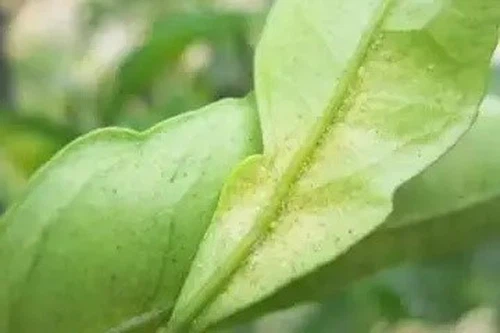
Yellow spider mites: The affected leaves lose green and form large yellow spots, the back of the leaves are sunken, the front is protruding, and the sunken part is often covered with silk webs.
White spider mites: The damage is burnt, and a layer of white silk-like silk webs is formed on the front of the leaves or branches.
(3) Host: Citrus red spider mites and yellow spider mites are mainly distributed in various citrus producing areas in China. White spider mites mainly harm vegetables, soybeans, peanuts, sorghum, apples, peaches, greenhouse flowers and other crops and nearly 100 kinds of weeds.
2. Morphological identification
The metamorphosis process is egg-yolk mite-nymph mite-adult mite.
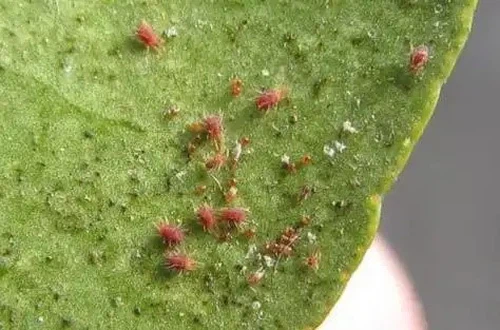
Adult mites: The size of adult mites is white spider>red spider>yellow spider, with 4 pairs of legs. The adult citrus red spider is purple-red, with 13 pairs of small tumor-like protrusions on the back. The yellow spider is nearly pear-shaped, light yellow-white. The white spider is oval, white, with a black long spot on each side of the back.
Eggs: The three mites are uniform in size and shiny. The red spider is flat spherical, bright red, with a vertical long handle on the top. The yellow spider is spherical, orange-yellow, with a short handle on the top. The white spider is spherical, smooth, milky white at first, gradually orange-yellow, and red eyes appear when it is about to hatch.
Juvenile mites: The red spider is lighter in color and has 3 pairs of legs. The yellow spider mites are nearly round and light yellow when they are first hatched. After about 1 day in spring and autumn, 4 black spots can be seen on the back of the female mite. The white spider mites are nearly round and white when they are first hatched, and they turn dark green after feeding, with red eyes.
Nymph mites: The body shape of the three nymphs is similar to that of the adult mites, but they are smaller.
3. Occurrence pattern
Distribution: Citrus red spider mites belong to the positive spider mite family, mainly distributed in the outer and upper parts of the crown. Yellow spider mites do not like strong light and mostly live on the back of leaves. The lower part and inner part of the crown are more seriously damaged than the top and outer part, and the northeast side of the crown is more seriously damaged than the southwest side. White spiders are mainly concentrated on the lower old leaves, with more on the front side of the leaves than on the back.
Damage period: Citrus red spider mites have two peak periods of occurrence in a year, the spring shoot period from April to June and the autumn shoot period from September to November. Yellow spider mites occur 10-15 days earlier than red spider mites. The peak period of damage is from the germination of spring buds to flowering (March to April). At this time, the low temperature and little rain are serious. The occurrence period of white spiders is mainly from May to July.
Occurrence conditions: Citrus red spider mites and yellow spider mites overwinter as eggs or adult mites on the back of citrus leaves or in the bud seams of branches. Citrus red spider mites occur when the temperature is 12-26℃, and the most suitable temperature is around 20℃. The optimum relative humidity is about 70%; the yellow spider occurs at a slightly lower temperature, 12-22℃, the optimum temperature is 15℃, low humidity; the white spider occurs under high temperature and drought conditions, the optimum temperature is 29-37℃, and the relative humidity is 35-55%.
Generation: The generation of the three mites is mainly affected by temperature, the generations overlap and the reproductive capacity is extremely strong. At 25℃, it takes 16 days for the citrus red spider to complete a generation, and 15-20 generations occur in Guangxi per year. At 23.5-35.4℃, it takes 23.2 days for the yellow spider to complete a generation, and 12-16 generations occur in Guangxi per year. At 25℃, it takes 11.04 days for the white spider to have a generation, more than 20 generations occur in the south, and 12-15 generations in the north.
4. Resistance rules
White spider resistance > citrus yellow spider resistance > citrus red spider resistance
(1) Due to improper use of pesticides and inadequate control techniques, fruit farmers often cause red spider mites to become rampant again, which has a serious impact on citrus production. Currently, red spider mites are common in citrus areas, and their resistance to pesticides is moderate to severe.
(2) Citrus yellow spider mites mainly occur in early spring and have a high resistance to pesticides, making control relatively difficult.
(3) White spider mites have a high resistance to pesticides and are very resistant to some commonly used acaricides such as cypermethrin and cypermethrin, with a control efficiency of less than 70%. Compared with other spider mites, its lethal dose to cypermethrin is 144 times higher. In recent years, it has been found that this mite has also developed varying degrees of resistance to some new acaricides after repeated use, and the more times the drug is used and the higher the concentration, the stronger the resistance. Therefore, chemical control is much more difficult.
5. Comprehensive prevention and control technical measures
To prevent and control the three types of mites, comprehensive prevention and control measures such as improving the ecological environment of the orchard, strengthening fertilizer and water management, enhancing tree vigor, protecting and utilizing natural enemies, and using pesticides scientifically should be adopted to safely, economically and effectively control the occurrence and harm of mites.
(1) Strengthen cultivation management.
Strengthen water and fertilizer management in orchards. For extensive citrus orchards, it is necessary to strengthen fertilizer and water management, increase the application of organic fertilizers and phosphorus and potassium fertilizers, enhance tree vigor, and improve the insect resistance of plants; improve water conservancy facilities, so that waterlogging can be drained and drought can be irrigated. Orchards with conditions can install sprinkler irrigation systems to increase the humidity of the orchard.
Improve the ecological environment of the orchard. Green the orchards and cover the orchards, such as planting legumes or weeds such as ageratum, to improve the microclimate of the orchard, which is conducive to the activities and reproduction of natural enemies and can effectively reduce harm.
Do a good job of winter pruning. In winter, prune the overgrown branches, diseased and insect-infested branches, and shaded branches, burn them in a centralized manner, and use lime sulfur or engine oil emulsion to clean the garden.
(2) Protect and utilize natural enemies.
It has a significant control effect on citrus red spider mites, especially predatory mites and mite-eating ladybugs.
(3) Strengthen monitoring and spray pesticides in a timely manner.
When harmful mites are found on 20% of the leaves and fruits; or when observed with a 10x portable magnifying glass, an average of 2 insects per leaf, spraying should be organized immediately.
When spraying pesticides for prevention and control, the inside of the crown must be sprayed first, and then the outside of the crown, the back of the leaves and the dark side of the fruit should be sprayed carefully to achieve a better control effect.
The pesticides that can be used are: Zhongke Fumanshi, Huweiman, Zhongshanlang and other three-bottle top products, Xihu, Niuzhen, Niudingman, Juxiu, Yingman, Jiayu No. 2, Zhenjiangjun and other mid-to-high-end miticides.