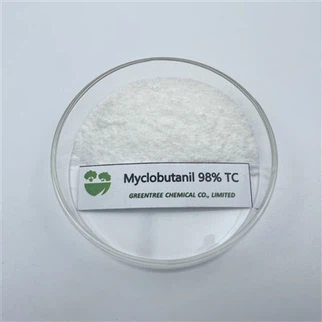
Features
Mainly interfere with the formation of pathogenic bacteria hyphae. In plants, it is first converted into carbendazim, which affects the division of germ cells, deforms the germ tubes that germinate and grow out of spores, and kills germs.
Suitable crops and safety
Widely used in the prevention and control of grain, cotton, oil, vegetables, flowers, fruit trees and other diseases.
Control object
Rice blast, rice sheath blight, wheat rust and powdery mildew, wheat scab, wheat smut, rape sclerotinia, tomato leaf mold, vegetable anthracnose, vegetable brown spot, vegetable gray mold , peanut scab, fruit tree powdery mildew, fruit tree anthracnose and other diseases are effective.
How to use : Seed dressing, spraying.
(1) Prevention and treatment of wheat smut: 200g of 50% wettable powder, 4kg of water, 100kg of seeds, and then stuffed for 6 hours.
(2) Control rice blast, sclerotinia, and sheath blight: use 70% wettable powder 70-100g per mu, add 40-50kg water to spray, and spray again every 7-10 days.
(3) Prevention and treatment of cotton seedling diseases: use 700g of 70% wettable powder per 100kg of cotton seeds as seed dressing.
(4) Control wheat head blight: use 70-100g of wet powder per mu, add 40-50kg of water, spray in the breach period, and apply again every 7 days.
(5) Prevention and treatment of peanut scab: Spray with 500 times liquid of 70% wettable powder in the early stage of the disease.
(6) Prevention and treatment of rapeseed sclerotinia and downy mildew: Use 100-150g of 70% wettable powder per mu, add 50kg of water, spray at the full flowering stage of rapeseed, and apply again every 7-10 days.
(7) Prevention and treatment of vegetable powdery mildew, anthracnose, gray mold, etc.: 70% wettable powder 800-1000 times liquid is sprayed at the early stage of the disease, and then sprayed once every 7-10 days.
(8) Prevention and treatment of citrus scab, anthracnose, pear scab, powdery mildew, rust, black spot, ring spot, grape powdery mildew, anthracnose, etc.: spray with 70% wettable powder 1000-1500 times liquid, Apply again every 10 days, 2 to 3 times in a row.
(9) Prevention and treatment of blue and green mold during storage period of citrus: use 500-700 times liquid of 70% wettable powder to soak the fruit after harvest.
Precautions
(1) Do not mix with copper-containing preparations and alkaline agents.
(2) Thiophanate-methyl has cross-resistance with carbendazim and benomyl and cannot be used interchangeably or mixed with them.
(3) Pathogenic bacteria are prone to develop resistance to this drug, and it cannot be used alone for a long time. It should be used in rotation or mixed with other types of fungicides.
(4) It must be stopped 2 weeks before crop harvest.
(5) It should be stored in a cool and dry place, strictly protected from moisture and sunlight.
Thiophanate-methyl can be mixed with a variety of fungicides, and the related compound preparations are as follows.
1) Thiophanate-methyl + econazole: prevent and control wheat powdery mildew.
2) Thiophanate-methyl + Hexaconazole: Control rice sheath blight.
3) Thiophanate-methyl + difenoconazole: control pear scab.
4) Thiophanate-methyl+Kresstrobin: Prevent and control apple tree ring spot.
5) Thiophanate-methyl + flusilazole: prevent pear scab.
6) Thiophanate-methyl + myclobutanil: control apple tree ring spot and apple tree anthracnose.
7) Thiophanate-methyl + metalaxyl + azoxystrobin: control rice bakanae disease.
8) Thiophanate-methyl + thiram: prevent and control apple tree ring spot.
9) Thiophanate-methyl + Ditofencarb: Prevent and control Botrytis cinerea.
10) Thiophanate-methyl + thiram + sulfur: control wheat head blight.
11) Thiophanate-methyl + mancozeb: control pear scab.
12) Thiophanate-methyl + sulfur: control cucumber powdery mildew.
13) Thiophanate-methyl + Triadimefon: Control wheat powdery mildew.
14) Thiophanate-methyl + chlorothalonil: control cucumber powdery mildew.
15) Thiophanate-methyl: prevent and control watermelon wilt.
16) Thiophanate-methyl + Tricyclazole: Control rice blast.
17) Thiophanate-methyl + Tebuconazole: Control rice sheath blight
Relevant application knowledge is for reference only. If you have any inquiries about related product needs, please pay attention to the contact information on the homepage of the website: www.greentreechem.com.