


Spinosad is a novel macrolide compound, an intracellular secondary metabolite produced by aerobic fermentation of soil actinomycetes, with spinosyn A and spinosyn D as its main active ingredients. It features a broad insecticidal spectrum and delivers excellent control efficacy against Lepidoptera and Thysanoptera pests, while also exhibiting moderate insecticidal activity against certain Diptera, Coleoptera and Hymenoptera pests. In addition, thanks to its unique mode of action, spinosad boasts favorable selectivity and high safety to non-target organisms. As global demand for green and biopesticides keeps rising, the market demand for spinosad is growing steadily.
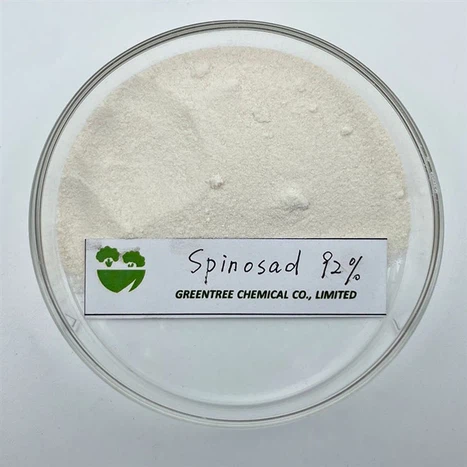
Spinosad Mixture Formulations
1. Spinosad + Emamectin Benzoate
This combination shows excellent quick-acting effect against small pests such as thrips and covers a wide insecticidal range. The dual action mechanisms help delay pest resistance development. Emamectin benzoate is a high-efficiency, low-toxicity, low-residue and pollution-free insecticide. Its main drawback lies in slow efficacy; pests are generally killed 3 to 4 days after application, which makes many farmers mistakenly believe it has poor insecticidal performance.
2. Spinosad + Chlorfenapyr
The mixture acts via stomach poisoning and contact killing, features long persistent efficacy and presents obvious synergistic effects.
3. Indoxacarb + Spinosad
It is widely used for the control of rice leaf folder, with fast knockdown effect and long field duration.
Why do spinosad products differ greatly in practical control effects?
First, spinosad is a biotechnological fermentation product, and its active ingredient titer directly determines field efficacy. As a mixed fermentation product mainly composed of spinosyn A and spinosyn D, under the equivalent total content of spinosyn A plus D, a higher ratio value of spinosyn A to D means stronger biological activity.
Second, insufficient application dosage fails to achieve ideal insecticidal results and will accelerate the development of pest resistance to spinosad. Due to the high cost of spinosad technical material, many commercial products contain insufficient effective ingredients, and spinosad is merely used as an auxiliary or synergistic component in compound formulations.
Third, distinct formulation processing technologies lead to huge gaps in actual efficacy. Spinosad has low water solubility and requires professional formulation processing to facilitate absorption by crops and pests. Apart from the purity of technical material, particle size, uniformity, types of adjuvants, wetting agents and spreaders adopted in formulation production all play decisive roles in maximizing its insecticidal efficacy.


