Why should kiwifruit planting be kept warm?
Severe cold may cause certain damage to the kiwifruit tree, and freezing may cause tree disease, affecting the growth and yield of the kiwifruit tree. Different developmental stages of kiwifruit have different tolerances to extreme temperatures.
The tolerance to low temperature was higher in the dormant period of kiwifruit and lower in the growing period.
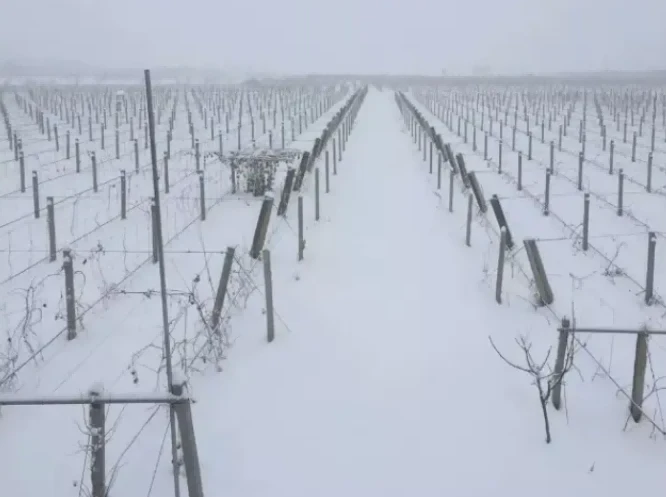
Low temperature resistance performance of common varieties
1. Delicious kiwi
Delicious kiwifruit varieties can withstand short-term low temperature above -15℃ and long-term continuous low temperature above -12℃ after the branches and vines enter full dormancy in winter, but can only endure short-term low temperature of -1.5℃ and -0.5℃ after germination and before falling leaves short-term low temperature.
2. Chinese kiwifruit
The tolerance of Chinese kiwifruit varieties to low temperature is lower than that of delicious kiwifruit.
Its tolerance to extreme minimum temperatures is about 1-2°C higher than that of delicious kiwifruit varieties, that is, it can tolerate short-term low temperature hazards of above 0.5°C and above -10°C in the growing season and dormant season, respectively, and above 1.5°C and -8°C. Permanent low temperature hazards above ℃.
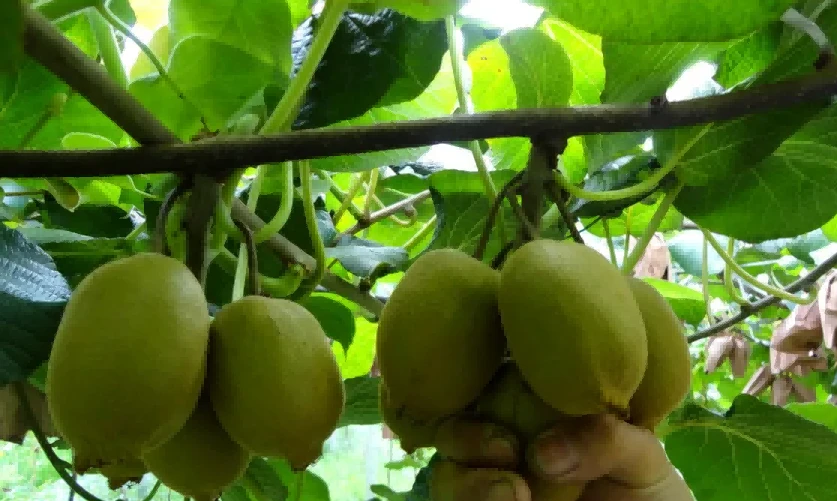
Freeze damage
1. Bud
The harm of sudden and large temperature drop and low temperature beyond the tolerance limit to kiwifruit is manifested as frozen buds in early spring, the organs in the buds cannot develop normally, or the developed organs turn brown and die, resulting in the failure of buds to germinate normally.
2, branches, fruit
Or the germinating young shoots and young leaves will change color and die. Freezing damage in late autumn is manifested as young shoots that are too late for normal fallen leaves, leaves dry up, turn brown and die, and hang on branches and vines without falling off;
For the fruit that has not been picked, the causal stalk will not be separated from the layer, which is difficult to pick. After picking, it will not pass the post-ripening stage, the fruit cells will not separate, and it will always be hard and inedible;
Frost damage in the dormant season is manifested as branch cracking, dehydration of branches and vines, commonly known as "scratching tips or strips", buds are underdeveloped by freezing, or dead on the outside, unable to germinate.
Sometimes, although the degree of temperature reduction does not reach the above-mentioned indicators, accompanied by low humidity and strong wind, commonly known as "dry and cold wind", it will lead to severe dehydration and drying of branches, stripping, longitudinal cracks of large branches, and even death of the whole plant.

Kiwi Freeze Protection
1. Shake off the snow on the kiwifruit tree in time to shorten the freezing time of the tree.
2. In the kiwifruit orchard, the grass is fumigated at a certain point to promote the rapid melting of the snow and ice on the tree.
3. If possible, cover the canopy or trellis with film to protect the canopy, or you can
Put weeds or twigs, bamboo branches, etc. on the canopy or trellis to reduce the damage of ice and snow to the branches.
4. Brush the trunk and main branches with 10% fresh lime liquor.

5. After the ice and snow melt, spray the tree with 3-5 Baume degree lime sulfur mixture or 600 times of agricultural anti-120 or 500 times of agricultural streptomycin.
6. After the ice and snow melt, cut off the branches broken by the snow in time, and apply 450-500 times the amount of agricultural streptomycin to the cuttings.
7. Correct the trellis in time after the snow and ice, and arrange the branches.
8. Topdressing once before germination, with available nitrogen as the main fertilizer, combined with an appropriate amount of phosphorus and potassium fertilizer, mixed with water and irrigated.
Generally, 0.5-1.5 kg of urea and 0.2-0.5 kg of quick-acting phosphorus and potassium fertilizers are applied to the trees that are put into production;
Apply 0.2-0.5 kg of urea to trees that are not in production, and apply an appropriate amount of quick-acting phosphorus and potassium fertilizers;
When the tree is first planted, it depends on the dryness and wetness of the soil. When it is dry, it is only watered without fertilization. When the humidity is high, it should be drained and dehumidified in time.