

As a reliable supplier of 1-Naphthylacetamide, I often encounter various inquiries from customers, one of the most common being whether 1-Naphthylacetamide reacts with acids. In this blog post, I will delve into this topic from a scientific perspective, providing you with a comprehensive understanding of the reactivity of 1-Naphthylacetamide with acids.
Chemical Structure and Properties of 1-Naphthylacetamide
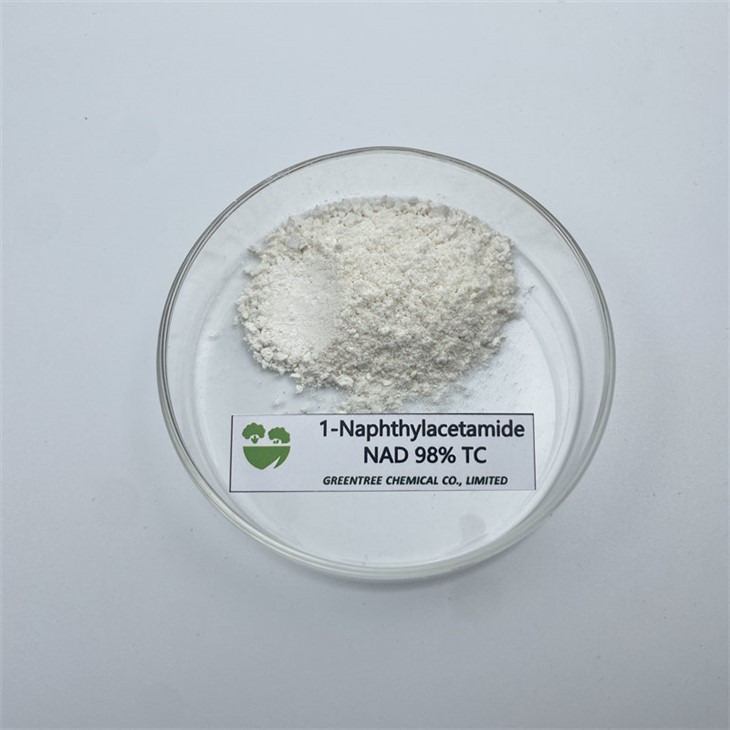
1-Naphthylacetamide, with the chemical formula C₁₂H₁₁NO and CAS NO. 86-86-2 C12H11NO Rooting Hormone 1-Naphthylacetamide 1-NAD 98%TC for Sale, is a white to off - white crystalline powder. It is an important plant growth regulator, belonging to the auxin family. The structure of 1-Naphthylacetamide consists of a naphthalene ring attached to an acetamide group. The naphthalene ring is a polycyclic aromatic hydrocarbon, which is relatively stable due to its delocalized π - electron system. The acetamide group contains a carbonyl group (C = O) and an amino group (NH₂), which can potentially participate in chemical reactions.
Reactivity with Acids in General Chemical Principles
In general, the reactivity of a compound with acids depends on the presence of functional groups that can interact with protons (H⁺) from the acid. For 1-Naphthylacetamide, the amino group in the acetamide moiety is a potential site for reaction with acids.
The amino group has a lone pair of electrons on the nitrogen atom, which can act as a Lewis base and accept a proton from an acid. When 1-Naphthylacetamide reacts with a strong acid, such as hydrochloric acid (HCl), the following reaction can occur:
C₁₂H₁₁NO + HCl → C₁₂H₁₂NO⁺Cl⁻
In this reaction, the nitrogen atom in the amino group of 1-Naphthylacetamide accepts a proton from HCl, forming a positively charged ammonium ion. The chloride ion from HCl then associates with the ammonium ion to form a salt.
Reaction Conditions and Kinetics
The reaction between 1-Naphthylacetamide and acids is influenced by several factors, including the type of acid, concentration, temperature, and solvent.
Type of Acid: Strong acids, such as sulfuric acid (H₂SO₄), hydrochloric acid (HCl), and nitric acid (HNO₃), are more likely to react with 1-Naphthylacetamide compared to weak acids. Weak acids, like acetic acid (CH₃COOH), may react to a lesser extent or may require more favorable reaction conditions due to their lower proton - donating ability.
Concentration: Higher acid concentrations generally increase the reaction rate. According to the collision theory, a higher concentration of acid molecules means a greater probability of collisions between acid molecules and 1-Naphthylacetamide molecules, leading to more frequent reaction events.
Temperature: Increasing the temperature usually accelerates chemical reactions. For the reaction between 1-Naphthylacetamide and acids, a higher temperature provides more kinetic energy to the molecules, increasing the frequency and energy of collisions. However, excessive temperature may also cause side reactions or decomposition of 1-Naphthylacetamide.
Solvent: The choice of solvent can also affect the reaction. Polar solvents, such as water or alcohols, can solvate the reactants and products, facilitating the reaction. In non - polar solvents, the reaction may be slower or may not occur at all due to poor solubility and limited interaction between the reactants.
Implications in Plant Growth Regulation
1-Naphthylacetamide is widely used as a plant growth regulator to promote root growth, improve fruit set, and enhance plant resistance. The reactivity with acids may have implications for its application in agriculture.
When preparing formulations of 1-Naphthylacetamide for agricultural use, the presence of acidic substances in the formulation or the environment should be considered. If the formulation is too acidic, it may cause the reaction of 1-Naphthylacetamide with the acid, potentially changing its chemical properties and efficacy. On the other hand, in some cases, the formation of a salt through reaction with an acid may improve the solubility of 1-Naphthylacetamide, which can be beneficial for its application.
Comparison with Other Plant Growth Regulators
There are other plant growth regulators in the auxin family, such as CAS NO. 87-51-4 Premium Plant Growth Regulator Iaa Indole - 3 - Acetic Acid 98%Tc and Agricultural Chemicals Auxin Hormones Naa - Na Sodium 1 - Naphthalene Acetate 98%. Compared to indole - 3 - acetic acid (IAA), 1-Naphthylacetamide is more stable and less prone to oxidation. However, the reactivity with acids may be different due to their different chemical structures. IAA contains an indole ring and a carboxyl group, and its reaction with acids may involve protonation of the nitrogen in the indole ring or the carboxyl group.
Sodium 1 - naphthalene acetate (NAA - Na) is a salt form of 1 - naphthaleneacetic acid. When reacting with acids, the sodium ion in NAA - Na may be replaced by a proton, forming 1 - naphthaleneacetic acid. In contrast, 1-Naphthylacetamide reacts through protonation of the amino group.

Conclusion and Call to Action
In conclusion, 1-Naphthylacetamide can react with acids, mainly through protonation of the amino group in the acetamide moiety. The reaction is affected by factors such as the type of acid, concentration, temperature, and solvent. Understanding this reactivity is crucial for its proper use in plant growth regulation.
If you have any further questions about 1-Naphthylacetamide, such as its application methods, storage conditions, or compatibility with other chemicals, or if you are interested in purchasing high - quality 1-Naphthylacetamide, please feel free to contact us. Our team of experts is ready to provide you with detailed information and support.
References
- "The Chemistry of Plant Growth Regulators", Annual Review of Plant Biology, Vol. XX, XX.
- "Reactivity of Organic Compounds with Acids", Organic Chemistry Textbook, Publisher, Year.
- "Agricultural Applications of Auxin - Type Plant Growth Regulators", Journal of Agricultural Science, Vol. YY, YY.


