

Indole butyric acid (IBA) is a well - known plant growth regulator that has been widely used in agriculture and horticulture. Ethylene, on the other hand, is a gaseous plant hormone that plays a crucial role in various physiological processes in plants, including fruit ripening, senescence, and stress responses. In this blog, as an Indole butyric acid supplier, I'll delve into the effects of IBA on plant ethylene production and how this interaction can influence plant growth and development.
Mechanism of Indole Butyric Acid and Ethylene in Plants
Before discussing the effects, it's essential to understand the basic functions of IBA and ethylene in plants. Indole butyric acid is an auxin - type plant growth regulator. Auxins are involved in a wide range of plant growth processes such as cell elongation, root initiation, and apical dominance. They work by promoting the loosening of cell walls, which allows cells to expand and grow.
Ethylene, the simplest unsaturated hydrocarbon, is a unique plant hormone. It is synthesized from methionine, and the key enzymes involved in its biosynthesis are 1 - aminocyclopropane - 1 - carboxylic acid (ACC) synthase and ACC oxidase. Ethylene participates in diverse plant processes. In fruit, it triggers the ripening process by promoting the breakdown of starch into sugars, softening of the fruit due to cell wall degradation, and changes in color and aroma. In leaves, it can promote senescence, leading to yellowing and abscission.
Effects of Indole Butyric Acid on Ethylene Production
Stimulation of Ethylene Biosynthesis
One of the primary effects of IBA on ethylene production is the stimulation of its biosynthesis. IBA can up - regulate the expression of genes encoding ACC synthase and ACC oxidase. When plants are treated with IBA, the increased activity of these enzymes leads to an elevated production of ACC, which is then converted to ethylene.
For example, in some cuttings treated with IBA to promote root formation, an initial increase in ethylene production is often observed. This increase in ethylene may play a role in the early stages of root development. It can influence cell division and differentiation in the root primordium. The elevated ethylene levels may also trigger the expression of genes involved in stress responses, as the cutting is in a vulnerable state during the rooting process.
Interaction with Ethylene Signaling Pathways
IBA can also interact with ethylene signaling pathways in plants. Ethylene signaling involves a series of receptors and downstream components that ultimately lead to changes in gene expression. IBA may modulate the sensitivity of plants to ethylene. In some cases, it can enhance the plant's response to a given level of ethylene.
This interaction can be beneficial in certain agricultural practices. For instance, in the production of ornamental plants, the combined effect of IBA and ethylene can be used to control plant height and branching. By adjusting the levels of IBA, growers can fine - tune the plant's response to endogenous or exogenous ethylene, resulting in more compact and aesthetically pleasing plants.
Influence on Plant Growth Stages
The effects of IBA on ethylene production can vary depending on the plant growth stage. During the vegetative growth stage, the increase in ethylene production induced by IBA may have a negative impact on plant growth if the ethylene levels become too high. High ethylene levels can lead to stunted growth, epinasty (downward curvature of leaves), and reduced photosynthesis.
However, during the reproductive stage, the interaction between IBA and ethylene can be more complex. In some cases, a moderate increase in ethylene production due to IBA treatment can enhance fruit set. Ethylene can promote the release of pollen and increase the receptivity of the stigma, thus improving the chances of fertilization.
Implications for Agricultural and Horticultural Practices
Rooting of Cuttings
As mentioned earlier, IBA is commonly used to promote rooting in plant cuttings. The initial increase in ethylene production induced by IBA during this process can be part of a coordinated response that leads to successful root formation. However, it's important to manage the ethylene levels carefully. If ethylene accumulates to excessive levels, it can inhibit root growth. Therefore, in commercial propagation, the concentration of IBA and the environmental conditions, which can affect ethylene production and accumulation, need to be optimized.
Fruit Production
In fruit production, the interaction between IBA and ethylene can be exploited to improve fruit quality and yield. For example, in some fruit crops, applying IBA at the appropriate time can regulate ethylene - mediated processes such as fruit ripening. By controlling the timing and intensity of ethylene production, growers can ensure a more uniform ripening process, which is beneficial for harvesting and marketing.

Stress Tolerance
Both IBA and ethylene are involved in plant stress responses. IBA - induced changes in ethylene production can enhance a plant's ability to tolerate various stresses, such as drought, salinity, and pathogen attack. Ethylene can trigger the activation of defense - related genes, while IBA can promote root growth, which helps the plant to better access water and nutrients under stress conditions.
Our Indole Butyric Acid Products and Related Offerings
As an Indole butyric acid supplier, we offer high - quality IBA products that can be used in various agricultural and horticultural applications. Our IBA is carefully formulated to ensure optimal performance in promoting plant growth and regulating ethylene - related processes.
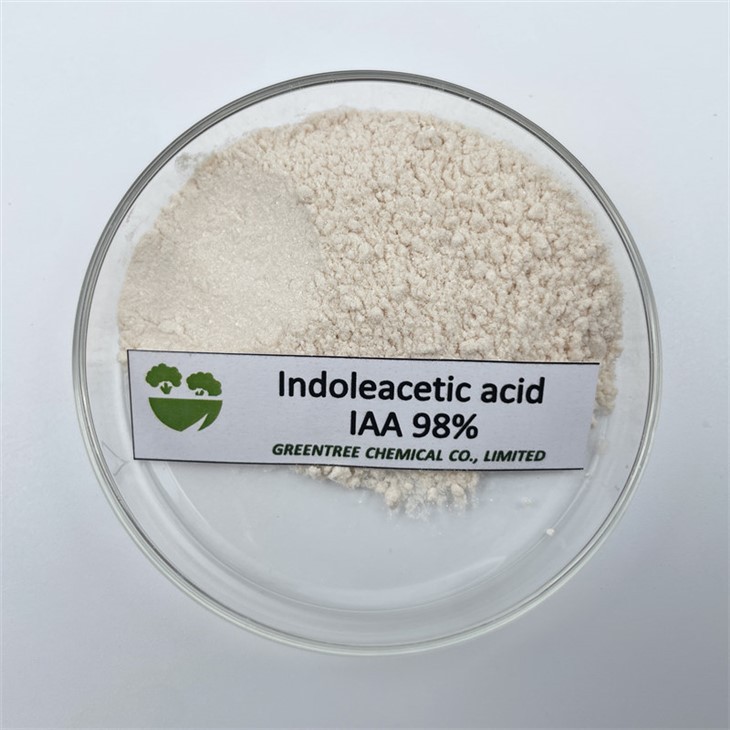
In addition to IBA, we also provide other plant growth regulators that can work in conjunction with IBA to achieve better results. For example, you can also explore our CAS 87 - 51 - 4 Iaa Indole - 3 - Acetic Acid 98 Tc Agricultural Plant Growth Promotion, Sodium 1 - Naphthylacetamide Acetic Acid 98%Tc Products 86 - 86 - 2 C12H11NO, and CAS No. 61 - 31 - 4 C12H9O2Na 98%Tc Agricultural Growth Regulator Naa - Na Naphthaleneacetic Acid. These products can be used in combination with IBA to fine - tune plant growth and development according to your specific needs.
Contact Us for Procurement
If you are interested in our Indole butyric acid products or have any questions about their application in regulating plant ethylene production, we encourage you to contact us for procurement and further discussion. Our team of experts is ready to provide you with professional advice and support to help you achieve the best results in your agricultural or horticultural projects.
References
- Abeles, F. B., Morgan, P. W., & Saltveit, M. E. (1992). Ethylene in Plant Biology. Academic Press.
- Davies, P. J. (Ed.). (2010). Plant Hormones: Biosynthesis, Signal Transduction, Action! Kluwer Academic Publishers.
- Taiz, L., & Zeiger, E. (2010). Plant Physiology. Sinauer Associates.


