A customer consulted and said that there were a lot of mites growing on the peppers and he didn't know which medicine would be effective. So he was recommended bifenazate. The grower purchased the spray himself, but after a week, he said that the mites were not controlled and were getting worse. This should not be possible. So I asked the customer to send a picture of the pesticide for a look. No wonder it didn't work. He bought bifenazate instead of bifenthrin. So what is the difference between bifenthrin and bifenazate?
In terms of pest control, bifenthrin is even better
Bifenthrin is a very broad-spectrum insecticide, not only effective against mites, but also against aphids, thrips, planthoppers, cabbage caterpillars, and underground insects. It performs well in low-resistant areas. However, in areas with high resistance (most vegetable and fruit tree areas), the effect of bifenthrin is severely reduced, and it can only be used as a pharmaceutical. For example, to control aphids and thrips, bifenthrin is used with acetamiprid and thiamethoxam. To control cabbage caterpillars, use bifenthrin combined with fenclofenil; to control underground worms, use bifenthrin combined with clothianidin. Bifenazate is currently mainly used in the prevention and control of mites in agricultural production, and other directions have not yet been explored.
Both can treat mites, but the effects are different
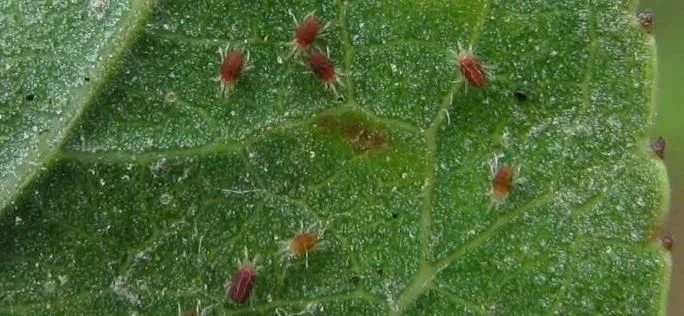
Bifenthrin has a certain effect on red and white spiders, especially when it was first launched, the effect was pretty good. However, with its extensive use in agricultural production, the effect has become worse and worse. Especially in recent years, bifenthrin has been used in addition to controlling red spider mites on wheat, and it has basically played a supporting role in other fields.
Bifenazate is an insecticide specifically designed to control mites. It is particularly effective against red and white spiders, especially the adults, which can be quickly eliminated within 24 hours.
Can bifenthrin be used to prevent spider mites?
After reading this, some friends can't help but ask, can bifenthrin be used to prevent red and white spiders? The advice to everyone here is that it is best not to use it in fruit and vegetable growing areas!
Red and white spiders are seriously resistant to bifenthrin, and the preventive effect of bifenthrin is very poor. Bifenthrin can be used as an auxiliary to synergize various insecticides. If you want to prevent red and white spiders at the lowest cost, you can choose abamectin instead.
The following two products are introduced respectively:
Bifenthrin
Bifenthrin is a pyrethroid insecticide and acaricide that kills insects quickly. The insects begin to die within one hour after application. It mainly has the following characteristics:
1. It is suitable for a wide range of crops and kills many insects. Bifenthrin can be used on wheat, barley, apples, citrus, grapes, bananas, eggplants, tomatoes, peppers, watermelons, cabbage, green onions, cotton and other crops.
The diseases it can control include spider mites, aphids, cabbage caterpillars, diamondback moths, peach heartworms, whiteflies, tea caterpillars and other pests, with a wide insecticidal spectrum.
2. Kill insects quickly and last for a long time. Bifenthrin has contact and gastrotoxic effects. It is precisely because of its contact killing effect that the insects begin to die 1 hour after application, and the insect death rate is as high as 98.5% within 4 hours, and it kills eggs, larvae, and adult mites; in addition, bifenthrin has a lasting effect of up to 10 -around 15 days.
3. High insecticidal activity. The insecticidal activity of Bifenthrin is higher than other pyrethroid agents, and the insect control effect is better. When it is used on crops, it can penetrate into the crop and move from top to bottom as the liquid moves inside the crop. Once pests harm the crop, the bifenthrin liquid in the crop will poison the pests.
Compound medicines
Although a single dose of Bifenthrin has a very good insecticidal effect, some pests will gradually develop resistance to it as the time and frequency of use increase. Therefore, other agents can be appropriately mixed and used together to achieve better insecticidal effects: bifenthrin+thiamethoxam, bifenthrin+fenfentrile, bifenthrin+sulfenib, bifenthrin+lufenthiuron, bifenthrin+thiacloprid, bifenthrin+clothianidin, bifenthrin+dinotefuran, bifenthrin+imidacloprid, bifenthrin+acetamiprid, etc.
Of course, bifenthrin can also be compounded with other pharmaceuticals such as diafenthiuron, diflubenzuron, and fenacetate, and the effects are also relatively satisfactory.
Precautions
(1) Pay attention to drug resistance. Bifenthrin, because it has no systemic effect, cannot quickly penetrate into all parts of the crop. Therefore, when spraying, it must be sprayed evenly. In order to prevent pests from developing resistance to the pesticide, bifenthrin is generally used in combination with other insecticides, such as thiamine. Insecticide effects such as pyroxam and imidacloprid will be better.
(2) Pay attention to the usage site. Bifenthrin is toxic to bees, fish and other aquatic organisms, and silkworms. When applying, you should avoid places near bee colonies, flowering nectar crops, silkworm houses and mulberry gardens.
Bifenazate
Bifenazate is a new type of selective foliar acaricide that is non-systemic and is mainly used to control active spider mites, but has an egg-killing effect on other mites, especially two-spotted spider mites. Therefore, bifenazate is currently one of the better acaricides for killing two-spotted spider mites. At the same time, because it is safe for bees and does not affect the bee release in strawberry areas, bifenazate is also widely used in strawberry planting areas. The following focuses on introducing the mechanism and characteristics of bifenazate.
The mechanism of Bifenazate's miticidal action is a gamma-aminobutyric acid (GABA) receptor acting on the mite's conduction system. It is effective on all developmental stages of mites, has egg-killing activity and knockdown activity on adult mites, and has a very fast action time. The death of mites can be observed 36-48 hours after application.
At the same time, bifenazate has a long duration and can last for 20-25 days. Bifenazate has minimal effects on predatory mites and has no effect on plant growth. Because bifenazate is not affected by temperature, its effect on mites is very stable. In addition, it is very safe for bees and natural enemies of predatory mites and environmentally friendly.
Bifenazate controls a wide range of targets, including: two-spotted spider mites, honey locust spider mites, apple spider mites, citrus spider mites, southern claw mites, and spruce claw mites. Ineffective against rust mites, flat mites, broad mites, etc.
Compound pharmaceuticals
Bifenazate+ethobenazole; bifenazate+spirobenzofen; bifenazate+tetrafenazine; bifenazate+pyribenzolin; bifenazate+pyrifenazole, etc.
Precautions
(1) Bifenazate has a strong egg-killing effect, but it should be used when the insect population base is small (early in the growing season). When the insect population base is large, it needs to be mixed with a sexual snail killer.
(2) Bifenazate has no systemic properties. To ensure the efficacy, when spraying, ensure that both sides of the leaves and the surface of the fruit are sprayed evenly.
(3) Bifenazate is recommended to be used at intervals of 20 days, and applied up to 4 times per year for each crop, and to be used alternately with other acaricides with other mechanisms of action. It is not recommended to mix with organophosphorus and carbamate agents.