There are many piercing-sucking pests such as aphids and thrips. Imidacloprid is often mentioned as an insecticide with good control effect on piercing-sucking pests.
1. Characteristics of imidacloprid
Imidacloprid is a super-efficient insecticide of the nicotine class. When pests come into contact with imidacloprid, their central nervous system will be blocked and eventually paralyzed and die.
Imidacloprid not only has multiple effects such as contact killing, stomach poisoning and systemic absorption, but also has the following two characteristics:
(1) Good rapid effect and low residue. Imidacloprid has good rapid effect and has a high control effect one day after application. Moreover, the residual period of imidacloprid is short, about 25 days.
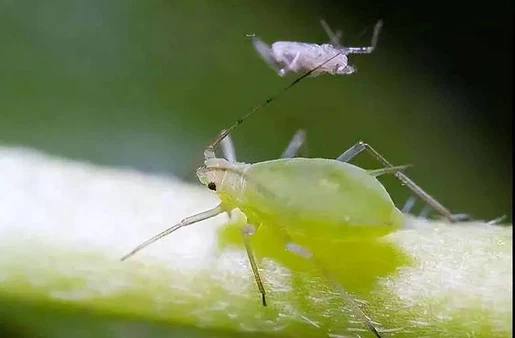
(2) Broad insecticide spectrum. Imidacloprid is mainly used to control piercing-sucking mouthparts pests, such as aphids, planthoppers, whiteflies, leafhoppers, and thrips; it is also effective against certain pests of the Coleoptera, Diptera, and Lepidoptera, such as rice weevils, rice mudworms, rice borers, and leafminers.
2. Compound pesticides
Although imidacloprid has a good insecticide effect, in order to reduce drug resistance, it is recommended to use it alternately with insecticides of different mechanisms. After compounding with other drugs, the insecticide speed is faster and the effect is better, such as:
(1) Bifenthrin·Imidacloprid
The combination of bifenthrin and imidacloprid not only has contact, stomach poisoning and systemic effects, but also has a good control effect on underground pests (such as white grubs). It is relatively safe and has a long lasting effect.
(2) Cyfluthrin·Imidacloprid
The combination of cyfluthrin and imidacloprid has systemic conduction, contact killing and stomach poisoning effects. It has a relatively fast knockdown and killing speed and a long lasting effect. It has a good control effect on piercing-sucking mouthparts pests (such as aphids), and can make up for the poor low-temperature efficacy of imidacloprid.
(3) Flupyridamil·Imidacloprid
The combination of flupyridamil and imidacloprid is mainly used for crops such as fruits, vegetables, pears, apples, and tea trees. It has strong permeability and systemicity in the plant body and can control aphids that harm different parts of the plant. It also has good rapidity and rain resistance.
(4) Imidacloprid·Buprofezin
The combination of imidacloprid and Buprofezin is mainly used for crops such as rice and tea trees. It has systemic conduction, contact killing and stomach poisoning effects. It can not only destroy the conduction of the insect's central nervous system and paralyze the insect's nerves, but also cause the larvae to molt and deform, and even die. It has a strong insecticidal effect, especially for scale insects.
3. Precautions for using imidacloprid
(1) When using some crops, special attention should be paid to the dosage in order to prevent pesticide damage. For example, when using it on watermelons, potatoes, sweet potatoes, and green onions, be careful not to use too much and keep it away from the root system.
(2) It is highly toxic to bees, silkworms, etc., so do not use it near bee farms or on mulberry trees.
(3) Do not mix it with alkaline pesticides or substances (such as Bordeaux mixture, lime sulfur, etc.), which will reduce the efficacy of the pesticide and may also cause pesticide damage.
Finally, we must emphasize again that during the high incidence period of piercing-sucking pests, we must be clear about the characteristics of imidacloprid and use it reasonably and efficiently to prevent and kill insects, but we must pay attention to the dosage to prevent pesticide damage.