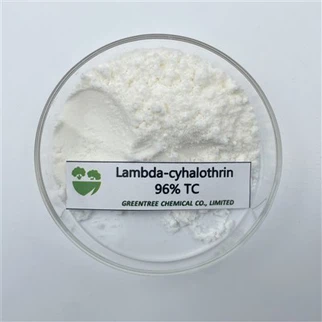
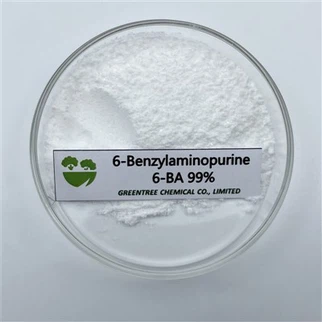
The rational mixing of pesticides can improve the control effect, delay the emergence of drug resistance of pests, improve the control effect, and reduce the dosage of pesticides.
If the mixing is unreasonable, it can be dangerous, ranging from no effect at all, or causing phytotoxicity in severe cases.
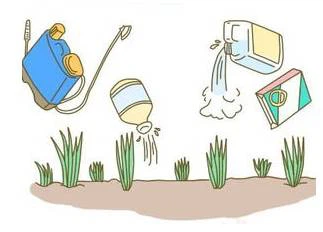
Pesticide mixing order:
①Pesticide mixing sequence should be accurate
The order of mixing foliar fertilizers and pesticides is usually: micro-fertilizer, water-soluble fertilizer, wettable powder, water-dispersible granules, suspending agent, micro-emulsion, water-emulsion, water, and emulsifiable concentrate are added in sequence (in principle, the mixing of pesticides should not exceed three kinds), each time one is added, stir and mix well, and then add the next one.
②Add water first and then add medicine
When performing secondary dilution and mixing, it is recommended to add half a bucket of water to the sprayer first, add the first pesticide and mix well.
Then, dilute the remaining pesticide with a plastic bottle, pour it into the sprayer after dilution, mix well, and so on (if you want the drug to be effective, don't be lazy).
③ No matter what kind of medicine is mixed, it should be noted that "it is ready to use and should not be stored for a long time"
Although the liquid medicine does not respond when it is first formulated, it does not mean that it can be left for a long time at will, otherwise it is easy to produce a slow reaction and gradually reduce the efficacy of the medicine.

The principle of mixing pesticides:
1. Mixed use of pesticides with different poisoning mechanisms: Mixed use of pesticides with different mechanisms of action can improve the control effect and delay the emergence of drug resistance of pests.
2. Pesticides with different poisoning effects:
Mixed pesticides have action modes such as contact killing, stomach poisoning, fumigation, and systemic absorption. Fungicides have action modes such as protection, treatment, and systemic absorption.
If these drugs with different control effects are mixed, it can be Complement each other, will produce a good control effect.
3. Mixing pesticides acting on different insect states:
Mixing pesticides acting on different insect states can kill all kinds of insect pests in the field, killing insects thoroughly, thereby improving the control effect.
4. Mixed use of pesticides with different aging effects:
some types of pesticides have good quick-acting control effects, but short duration; The mixed use of such pesticides not only has a good control effect after application, but also has a long-term control effect.
5. Mixed with synergist:
Although synergist has no direct poisoning effect on pests, it can improve the control effect when mixed with pesticide.
6. Mixed use of pesticides acting on different pests and diseases:
When several pests and diseases occur at the same time, this method can reduce the number of spraying times, reduce working time, and improve efficacy.

Precautions for mixing pesticides:
Although there are many benefits of mixing pesticides, do not mix them randomly. Unreasonable mixing is not only unhelpful, but also has the opposite effect. The following points should be paid attention to when mixing pesticides.
Does not change physical properties
That is, after mixing, there should be no oil slick, flocculation, precipitation or discoloration, and no heat generation, bubbles and other phenomena. If they are both powders, or both are granules, fumigants, and aerosols, they can generally be mixed.
Between different dosage forms, such as wettable powder, emulsifiable concentrate, concentrated emulsion, colloidal suspension, water solvent and other liquids with water as the medium should not be mixed arbitrarily.
Does not cause chemical changes
①Including many chemicals can not be mixed with alkaline or acidic pesticides
Under alkaline conditions such as Bordeaux mixture and lime sulfur mixture, carbamate, pyrethroid insecticides, and dithiocarbamic acid fungicides such as fumetox and daisen ring are prone to hydrolysis or complex chemical changes. thereby destroying the original structure.
② Under acidic conditions, 2,4-D sodium salt, 2-methyl-4-chloride sodium salt, and amitraz will also decompose, thus reducing the efficacy.
③ In addition to acidity and alkalinity, many pesticide varieties cannot be mixed with drugs containing metal ions.
④ Dithiocarbamate fungicides, 2,4-D herbicides mixed with copper preparations can generate copper salts and reduce the efficacy.
⑤ Thiophanate-methyl and thiophanate-methyl can be complexed with copper ions and lose their activity.
⑥ Except for copper preparations, other preparations containing heavy metal ions such as iron, zinc, manganese, nickel and other preparations should be used with special care.
⑦ Lime sulfur mixture and Bordeaux mixture can produce harmful copper sulfide and increase the content of soluble copper ions.
⑧ Propanil, butachlor, etc. cannot be mixed with organophosphorus and carbamate pesticides, and some chemical changes may cause phytotoxicity.

Pesticides with cross-resistance should not be mixed
Such as fungicides carbendazim and thiophanate-methyl have cross-resistance. Mixed use not only can not play the role of delaying the development of drug resistance, but will accelerate the emergence of drug resistance, so it should not be mixed.
Biopesticides cannot be mixed with fungicides
Many pesticides and fungicides are lethal to biological pesticides, therefore, microbial pesticides and fungicides cannot be mixed.