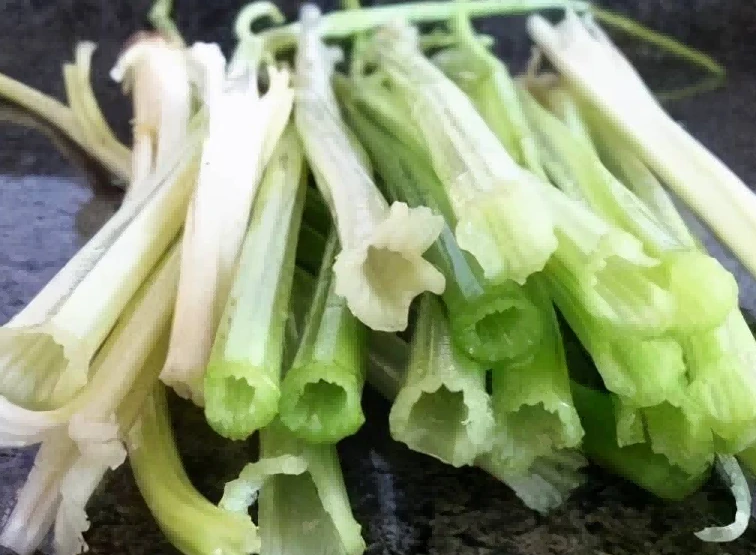
symptom
Celery is a solid variety. Celery grown from seeds of good solid varieties turned out to be hollow celery.
Etiology
One is the celery cultivated in the open field, which is the main cause of hollow celery in case of high temperature and drought. Especially in summer, the temperature difference between day and night is small, the respiratory consumption is high, and when the soil moisture supply is uneven, the water shortage of celery inhibits the transportation and absorption of various nutrient elements in the root, which not only affects the growth of the terminal bud, but also often causes thickening of the sclerenchyma in the petiole. As the tissue cells age, celery will be produced.
The second is that water and fertilizer management cannot keep up and cause hollowness. The root system of celery has weak fertilizer absorption ability and strong fertilizer tolerance. It needs nitrogen, phosphorus, potassium and trace elements. In the early stage of growth, the supply of phosphorus fertilizer is insufficient, which is not good for leaf differentiation and growth. The seedlings are thin and easy to appear hollow. Potassium fertilizer in the middle and later stages plays an important role in nutrient transport, thick petiole, fullness and luster, and growth is inhibited due to potassium deficiency in the field, and the petiole will appear hollow.
Third, soil drought and nitrogen deficiency will also affect its absorption of trace elements boron and calcium. Celery is sensitive to boron. When the plant is deficient in boron, the petioles appear longitudinally, and the heart leaves turn brown and crack. The fourth is to spray celery with 920, if the water and fertilizer cannot keep up, it will also appear hollow. Fifth, saline-alkali land, heavy sticky or sandy land, and land with serious pests and diseases will appear hollow.
Prevention method
①Choose high-quality celery seeds and plant them on fertile land with good conditions. The pH value of the soil should be neutral to slightly acidic. Do not plant them on clay or sandy soil.
②Celery is a cold-resistant vegetable and likes a cool and humid climate. For indoor cultivation in sheds, it is advisable to control the temperature at 15-23°C during the day, the highest should not exceed 25°C, and 10°C at night, not lower than 5°C, to prevent freezing damage and early bolting.
③ Strengthen fertilizer and water management. Apply enough base fertilizer, apply 5000kg of high-quality decomposed organic fertilizer per 667m2, and add 150kg of fermented chicken manure or 15kg of diammonium phosphate. The topdressing fertilizer in the growth period is mainly quick-acting nitrogen fertilizer, combined with potassium fertilizer, about 20kg per 667m2 each time, once every half a month.
④ After spraying 920, pay attention to timely watering and topdressing, water frequently with small water, and fertilize frequently, and do not remove fertilizer. When boron deficiency is found, spray 0.3% to 0.5% borax solution on the leaves.
⑤In the vigorous growth period, pay attention to keep the soil moist and not waterlogged. The soil humidity should be 60% to 80%. Pay attention to drainage after rain.
⑥ Timely prevention and control of diseases and insect pests is found, and the leaves have a greater photosynthetic ability to fully supply the nutrients of the parenchyma cells in the petioles, so that the plants are strong and prevent hollowness.
⑦ Harvest in time after maturity.