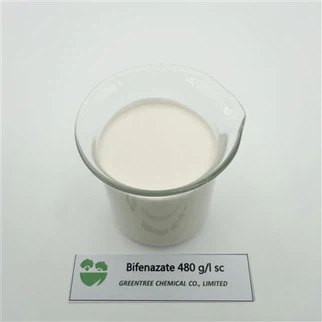
Fungal diseases are the most diverse type of diseases. Farmers hope to choose efficient fungicides. Today, I would like to introduce an excellent fungicide, azoxystrobin. This drug can prevent and treat almost all diseases caused by fungi, and has multiple functions of protection, treatment and eradication. It is currently the most widely used and excellent fungicide.

Azoxystrobin is a methoxyacrylate fungicide. It is a broad-spectrum, high-efficiency fungicide with good systemic conductivity, strong permeability and long lasting effect. It has protective, therapeutic and eradication effects on almost all fungal diseases. It can be used in a variety of ways. It can be used not only for stem and leaf spraying, but also for seed treatment and soil treatment.
Main features
(1) Broad fungicide spectrum: Azoxystrobin is a broad-spectrum fungicide that can be used to prevent and treat almost all fungal diseases. Spraying once can prevent and treat dozens of diseases at the same time, greatly reducing the number of spraying times.
(2) Strong permeability: Azoxystrobin has strong permeability. It does not need to add any penetrant when used. It can penetrate across layers. It only needs to be sprayed on the back of the leaves to quickly penetrate to the back of the leaves, achieving a control effect of killing the target.
(3) Good systemic conductivity: Azoxystrobin has strong systemic conductivity. Generally, after application, it can be quickly absorbed by leaves, stems and roots and quickly transmitted to various parts of the plant. Therefore, it can not only be used for spraying, but also for seed treatment and soil treatment.
(4) Long lasting effect: Azoxystrobin can be sprayed on leaves for 15 to 20 days, and can be used for seed dressing and soil treatment for more than 50 days, which can greatly reduce the number of spraying times.
(5) Good compatibility: Azoxystrobin has good compatibility and can be mixed with dozens of agents such as thiophanate-methyl, dimethomorph, and fenpropimorph. Mixing not only delays the drug resistance of pathogens, but also improves the control effect.
Applicable crops
Since myclobutanil has a wide range of disease control, it can be applied to a variety of food crops such as wheat, corn, and rice, cash crops such as peanuts, cotton, sesame, and tobacco, vegetable crops such as tomatoes, watermelons, cucumbers, eggplants, and peppers, various fruit trees such as apples, pear trees, kiwis, mangoes, litchis, longans, and bananas, as well as hundreds of crops such as Chinese medicinal materials and flowers.
Control objects
Myclobutanil is a broad-spectrum fungicide that can be used to control almost all fungal diseases such as early blight, late blight, gray mold, leaf mold, base rot, downy mildew, blight, powdery mildew, anthracnose, gray frost, black spot, black pox, cob brown blight, white rot, damping-off, leaf spot, wilt, brown spot, verticillium wilt, leaf spot, downy mildew, especially for powdery mildew, rust, glume blight, web spot, downy mildew, vine blight, late blight, and rice blast. It can achieve the purpose of multiple treatments with one spray.
Usage
(1) To prevent and control cucumber downy mildew, blight, anthracnose, black spot and other diseases, the drug can be used at the early stage of the disease. Generally, 60-90 ml of 25% myclobutanil suspension can be used per mu each time, and 30-50 kg of water can be added for even spraying. The spread of the above diseases can be well controlled in 1-2 days.
(2) To prevent and control rice blast, sheath blight and other diseases, the drug can be used before or at the early stage of the disease. 20-40 ml of 25% suspension can be used per mu each time. Spray once every 10 days, and spray twice in a row. The spread of the above diseases can be quickly controlled.
(3) To prevent and control watermelon wilt, anthracnose, vine blight and other diseases, the drug can be used before or at the early stage of the disease. 30-50 g of 50% water-dispersible granules can be used per mu each time. Spray once every 10 days, and spray 2-3 times in a row. The occurrence and further harm of the above diseases can be effectively prevented and controlled.
Special reminder
Azoxystrobin has strong permeability and systemicity. It is not necessary to add any adhesives and penetrants when using it, otherwise it is easy to cause phytotoxicity.
Azoxystrobin should be used when mixing seeds in the seedling stage with less than 3 leaves. Do not use it for spraying to avoid phytotoxicity.
Azoxystrobin cannot be mixed with emulsifiable concentrate to avoid phytotoxicity.