


In the development of modern agriculture, plant growth regulators have become essential chemical substances for growers, playing a role in inhibiting or stimulating the growth and development of the same or different plant species. Today, our focus is on sodium naphthaleneacetate (NAA). Many growers want to understand NAA and wonder if it is a broad-spectrum regulator. This article will explain what it is, whether it works on your plants, and usage techniques.
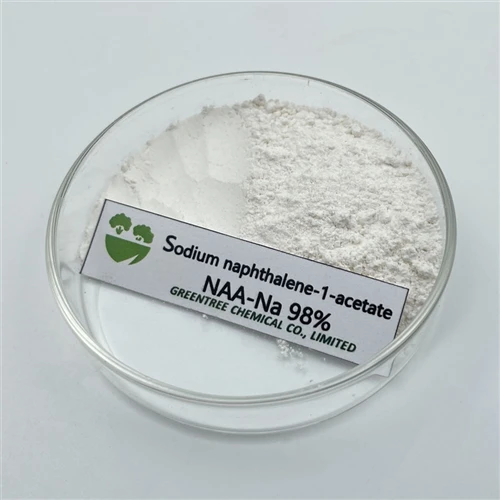
What is sodium naphthaleneacetate?
Sodium naphthaleneacetate (NAA) appears as white granules, powder, or crystalline powder; it is odorless or has a slightly odorous smell, with a slightly sweet and salty taste. It is stable at room temperature and in solution at pH 7-10, and is extremely soluble in water. Its soluble pH in ethanol is 8. Sodium NAA is the sodium salt of the strong base and weak acid naphthaleneacetic acid (NAA). Upon hydrolysis, it produces NAA. Plants utilize ions, so the presence of NAA ions is sufficient for its function.
Is sodium naphthaleneacetate a broad-spectrum plant growth regulator?
First, let's introduce what a broad-spectrum plant growth regulator is. It refers to a plant growth regulator applicable to a wide range of crops and used at multiple growth stages, not just targeting a single crop or a single physiological process.
Sodium naphthaleneacetate (NAA) is precisely this type: high-purity NAA enters the plant through leaves, tender epidermis, and seeds, and is transported with the nutrient flow to vigorously growing parts (growing points, young organs, flowers, or fruits), rapidly promoting cell division and expansion (fruit-enlarging agent, fruit-enlarging agent), and significantly promoting root tip development, inducing the formation of adventitious roots (rooting powder). It has the functions of regulating growth, promoting rooting and sprouting, inducing flowering, preventing flower and fruit drop, forming seedless fruits, promoting early maturity, and increasing yield. Simultaneously, NAA can also enhance the plant's resistance to drought, cold, disease, salinity, and hot, dry winds.
It is a broad-spectrum, highly effective, and low-toxicity plant growth regulator.
List of applicable crops
As a broad-spectrum plant growth regulator, sodium naphthaleneacetate has a wide range of applicable species, covering fruit trees, melons, solanaceous vegetables, and edible fungi: tomatoes, kiwis, grapes, watermelons, cucumbers, peppers, eggplants, pears, apples, and mushrooms are all within its applicable range.
In Ecuador, sodium naphthaleneacetate (NAA) is widely used in kiwifruit cultivation. Numerous kiwifruit orchards there use NAA to protect flowers and fruits, reduce fruit drop, and increase kiwifruit yield and marketable fruit rate. It is one of the most commonly used plant growth regulators in Ecuadorian kiwifruit farming. In addition, tomato and pepper growers in many Southeast Asian countries have long used NAA to address the problem of flower drop in vegetables.
Tips for using sodium naphthaleneacetate
To ensure sodium naphthaleneacetate (NAA) achieves stable effects, the key lies not in blindly applying the dosage, but in controlling the timing, concentration, environment, and formulation of the application. Below are the core usage techniques used by growers in practice:
• Control the application concentration; err on the side of dilution rather than concentration.
High concentrations can easily cause phytotoxicity, resulting in yellowing leaves and deformed young fruits. When using, it is necessary to dilute with water according to the recommended dosage based on the crop variety and growth stage.
• Optimize the appropriate time for pesticide application
Apply pesticides in the early morning or late afternoon when the temperature is between 20 and 28°C and there is no wind. Do not apply pesticides during the midday heat and strong sunlight, as rapid evaporation will not only reduce absorption efficiency but also easily cause phytotoxicity. If it rains within 4 hours after spraying, re-spray after the rain.
·Store properly
Normally, it can be sealed and stored in a cool, dry, and dark place, avoiding moisture, high temperature and sun exposure; the prepared medicine should not be stored for a long time, and should be prepared and used immediately.


