There are several phytohormones in plants at the same time, which can promote and synergize each other, and can also antagonize and offset each other. result of the interaction of the hormones.
synergistic effect
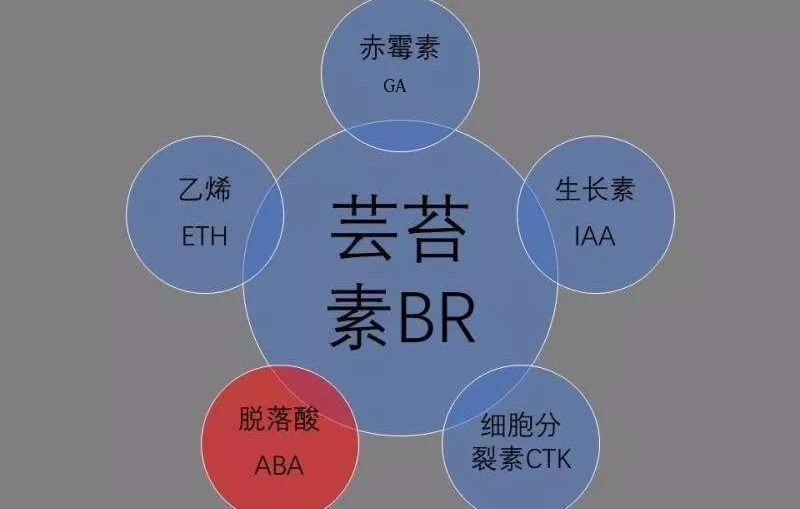
Synergistic effect means that one hormone can enhance the effect of another hormone. This phenomenon is called the synergistic effect of hormones. For example, low concentration of growth hormone and gibberellic acid can promote plant, coleoptile and hypocotyl. The growth of , stem segment and internode elongation showed synergistic effect.
Another example is that auxin promotes the division of the nucleus, while the cytokinin promotes the division of the cytoplasm. The two work together to complete the division of the nucleus and the cytoplasm. The effect of abscisic acid to promote shedding can be enhanced by ethylene.
Antagonism
Antagonism, also known as antagonism, refers to the phenomenon that the action of one substance is inhibited by another substance. There is antagonism between hormones, such as the induction of gibberellin, the synthesis of α-amylase and the promotion of seed germination, which are inhibited by the presence of abscisic acid.
The antagonism between gibberellin and abscisic acid is manifested in many aspects, such as growth, dormancy, etc. They are all derived from mevalonate, and through the same metabolic pathway, farnesyl pyrophosphate, under the action of phytochrome, long-day exposure Condition to form gibberellin, short-day conditions to form abscisic acid, therefore, the summer sunshine is long to produce gibberellin, so that the plant can continue to grow, and the short sunshine before winter will produce abscisic acid and make the buds go dormant.
Mutually reinforce each other
The effect of auxin in delaying organ shedding will be offset by the simultaneous use of abscisic acid, which strongly inhibits growth and accelerates the aging process, and may be relieved by cytokinin, which inhibits the degradation of chlorophyll and acid proteins , inhibit the senescence of leaves, while abscisic acid inhibits the synthesis of ribose and protein and increases the activity of nucleases, thereby promoting the degradation of nucleic acids and senescence of leaves.
Abscisic acid and cytokinin can also regulate the opening and closing of stomata, which proves that the antagonistic relationship between abscisic acid and auxin, gibberellin and cytokinin will directly affect some physiological effects.
the sameness and difference
Although both auxin and gibberellin can promote growth, they also have antagonistic effects. Using auxin can promote the rooting of cuttings, while gibberellin can inhibit the formation of adventitious roots. Auxin inhibits the germination of lateral buds and maintains the top of the plant. Cytokinin can eliminate apical dominance and promote the growth of lateral buds. In addition, polyamines and ethylene share a common biosynthetic precursor, methionine, so the effect of ethylene-induced senescence can be counteracted by polyamines.