What is brassinolide? It is a sterol compound. After brassinolide is metabolized, its sterol group can be used to synthesize the remaining hormones. For example, auxin can be metabolized in this direction, and it can also be synthesized in the direction of cytokinin, so it plays a synergistic and pivotal role in the middle.
1. Natural disasters
Heavy rain, drought, hail, etc. are all natural disasters. Brassinolide has an effect on these natural disasters, and the effect is very good.
(1) Low temperature
Low temperature will seriously affect the activity of cells. The activity of enzymes in cells is very low, and metabolism is relatively slow. If the cell membrane is unstable, if it freezes, the cell membrane will be broken and the cells inside will be frozen. This is the most common one.
Brassinolide itself can activate the enzymes in cells and accelerate cell metabolism. Brassinolide can improve the fluidity of the cytoplasm in crops and speed up metabolism, thereby providing enough energy to resist low temperatures.
(2) High temperature
When using brassinolide to resist high temperatures, be careful not to use it alone. It has a certain resistance to high temperatures, but it is only for increasing enzyme activity. Why is it not recommended to use it alone? The reason is that when the temperature is high, the plant itself is very hot and the respiration is very strong. If you adjust the respiration at this time and speed up its metabolism, you will find that it will quickly decompose the carbon compounds synthesized in the body and those nutrients. Then the plant will become relatively thin and weak, and its dry matter accumulation will become less. When it is time to grow fruits, it will quickly decompose the contents.
How to use brassinolide when it is high temperature? It is recommended that you combine it with nutrients, such as nitrogen, phosphorus and potassium fertilizers, and some more mature organic biohormones, such as alginic acid, protein, sugar, etc., in combination with brassinolide, which can improve the resistance of crops to high temperatures.
Because crops have a waxy layer on their epidermis, and brassinolide is oily, the waxy layer and brassinolide have a strong ability to bind.
In hot weather, due to the high temperature, the sprayed liquid will evaporate quickly, making it difficult for some systemic substances to be absorbed into the leaves. The water evaporates before penetrating the waxy layer. Therefore, the liquid can only stay on the surface of the waxy layer and cannot be absorbed into the cells. At this time, its protective effect will be greatly reduced.
If brassinolide is added when using this type of agent, it can promote the penetration of the liquid through the waxy layer into the cells, and can also increase the metabolic activity of the cells, so that some systemic drugs can be transported and absorbed faster, which will have a better protective effect.
It is not recommended to use brassinolide alone in high temperatures. It is recommended to use it in combination with organic biostimulants such as amino acids, fish protein, seaweed fertilizer, polysaccharides, etc. It can also be used in combination with nitrogen, phosphorus, potassium, and foliar fertilizers.
(3) Drought
Drought means lack of water, and high temperature does not mean drought.
During drought, there is a lack of water, the cell sap is very viscous, and the metabolism in the plant body is relatively slow. Since the stomata become very small or close to prevent water evaporation, the body's nutrient synthesis is insufficient. In addition, insufficient water and insufficient evaporation make nutrient transportation particularly difficult.
Since brassinolide can act as one of the four major types of plant growth regulators, it will promote the transfer of nutrients to the most needed places, thereby ensuring that crops can still grow relatively normally. For example, when crops are swelling fruits, if drought suddenly occurs, after using brassinolide, it can still promote the transportation of nutrients from leaves to fruits.
If brassinolide is not used, even if there are nutrients in the leaves, they will be transported to the swelling fruits very slowly, causing serious impact on the swelling of fruits. Therefore, brassinolide can be used during drought, or it can be used alone.
(4) Floods
When there is too much water, the roots of plants may rot. Brassinolide can improve the plant's ability to withstand the physiological stress caused by excessive water.
(5) Salt-alkali
Currently, salt-alkali is the most important disaster faced by cash crops, although in many cases it is not a natural disaster unless the crops are planted on saline-alkali land.
Man-made fertilizers have resulted in the soil of greenhouses or fruit trees being basically saline-alkali or acidic. Brassinolide can significantly improve the tolerance of crops to salt. Experiments have shown that if seeds are soaked in brassinolide for 24 hours and then placed in soil with a salt content 40% higher than normal, the crops will grow normally. If they are not soaked, it will be difficult for the roots of the crops to grow. Why does brassinolide have this effect?
Because brassinolide can accelerate the physiological metabolism of cells, it is inevitable that nutrients are synthesized and decomposed, the concentration of cytoplasm increases, and the difference in salt content with the outside world becomes relatively smaller.
Originally, the inside of the cell is very light, and the salt-alkali concentration outside is very high. Brassinolide takes away the water inside, and the cell wilts. If the concentration of cytoplasm increases after using brassinolide, the internal and external osmotic pressure is relatively low, the water loss is relatively slow, and the impact on growth will be relatively small.
What is more special is that when using brassinolide at high temperatures, try to add some other nutrients to prevent the phenomenon of excessive respiration affecting yield.
2. Relieve phytotoxicity
In fact, not only sterol fungicides have phytotoxicity, but many insecticides synthesized for controlling insects also have phytotoxicity that inhibits crop growth.
Remember that for sterol inhibitors, the phytotoxicity of insecticides and fungicides is the most suitable, and it can also alleviate the problems caused by other phytotoxicity, such as herbicides and growth point inhibition caused by excessive concentration.
3. Synergistic effect
The synergistic effect of brassinolide is very special.
(1) Synergistic effect of fungicides and brassinolide
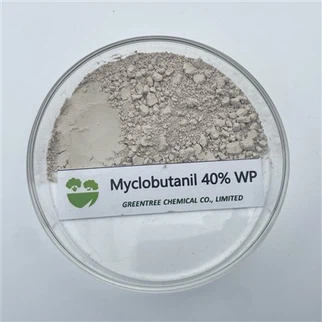
There is a product called myclobutanil, which is an ester. Brassinolide is also an ester. The two can dissolve well in each other. Therefore, when myclobutanil is transmitted, it can carry brassinolide together, and when brassinolide is transmitted, it can also carry myclobutanil together, which can coordinate the mobility between the two.
After the pathogen infects the leaves, the crop itself will develop resistance.
Due to the infection of pathogens, some substances that resist pathogens will be synthesized in the crop body. The synthesis process is the metabolic process, and brassinolide can promote the synthesis and decomposition in the crop body, and can promote the synthesis of substances that resist pathogens in the crop body. This is a positive synergistic effect of brassinolide on fungicides.
There are also some special fungicides, such as pyraclostrobin, which can greatly promote the absorption and utilization of nitrogen by crops themselves.
After using pyraclostrobin, the leaves of crops are green because it promotes the absorption and utilization of nitrogen. However, if the amount of pyraclostrobin is used in large quantities, the nitrogen will be greatly absorbed and utilized in the cell body, and the conversion of nitrogen will not keep up, and the absorption amount will be particularly large, which will cause nitrogen poisoning.
If brassinolide is added, it will be found that the synthesis of nitrogen elements can be increased, that is, the utilization efficiency, and the conversion of nitrogen will be accelerated, so nitrogen poisoning will not occur.
Everyone needs to pay attention that myclobutanil cannot be mixed with emulsifiable concentrate because it will greatly increase its permeability. Therefore, when using brassinolide, you can choose powder and aqueous solution, and never use emulsifiable concentrate.
(2) Synergistic effect of fertilizer and brassinolide
It is mainly manifested in the following two aspects:
First, it promotes the absorption and utilization rate of fertilizer.
Second, it improves the tolerance of crops to salinization.
(3) Synergistic effect of regulator and brassinolide
Brassinolide has the functions of several regulators except abscisic acid. If these regulators are used too much, brassinolide can be used to adjust them. Therefore, brassinolide has a positive regulatory effect.
4. Practical application scenarios of brassinolide
The following is a sharing of some professional information and some cases of personal experience.
(1) Seed soaking of gramineous crops
For example, wheat and rice, the two major economic crops, as well as corn, can all be soaked with brassinolide. The recommended concentration of brassinolide for soaking is 500-800 times, and the soaking time is 24 hours. If sowing at this time, the germination rate will increase and the root system will be more developed.

(2) Frost resistance of fruit trees
In winter, 2000 times of brassinolide can be used to spray branches and trunks to prevent the tree skin from being frostbitten.

If the temperature is too low, it will also freeze to death. This can improve the fruit tree's tolerance to low temperatures. If brassinolide is not sprayed at -5℃, it may freeze to death in 2 hours, but it may last for 5 hours if it is sprayed.
During the fruit swelling and color change period, spraying 2500 times of brassinolide will make the fruit look better.