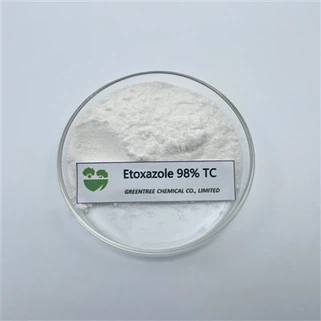
Greentree Chemical Co., Limited is one of the leading manufacturers and suppliers of cas 138261-41-3 insecticide pesticide imidacloprid 70 wdg 70% wdg in China. With abundant experience, our factory offer high quality chemicals made in China with competitive price. Welcome to contact us for free sample.
Growers want two things from an insecticide. They want pests to die quickly. And they want the product to keep working so they do not have to spray again next week.
| Specification | 97%TC, 70%WDG; 70%WP; 25%WP; 10%WP |
| Chemical Name | 4-phenoxyphenyl(RS)-2-(2-pyridyloxy) propyl ether |
| Appearance | White to light yellow crystalline powder |
| Molecular Formula | C20H29NO3 |
| Molecular Weight | 255.661 |
| Melting Point | 136-144ºC |
| Solubility | In water at 20°C,0.51g/l. In dichloromethane 50-100, in 2-propanol 1-2, toluene 0.5-1, n-hexane<0.1(all ing/l at 20°C) |
| Stability | Store in a cool, dry, dark, and sealed environment for 2 years. |
| Toxicity | Low toxicity |
| Structural Formula |  |
Speed of Action
Imidacloprid works through contact and ingestion. When a pest walks on a treated leaf, it picks up the chemical through its feet. When a pest eats treated plant tissue, it ingests the chemical. In both cases, the pest stops feeding within hours. Death follows within 24 to 48 hours depending on the pest species and temperature.
Aphids stop feeding within two to four hours after contact with a lethal dose. They fall off the plant or remain in place but stop moving. Death is visible within 24 hours under warm conditions above 20 degrees Celsius. Under cool conditions below 15 degrees Celsius, death may take 48 to 72 hours.
Whiteflies are slightly more tolerant. Feeding stops within six hours. Death occurs within 24 to 48 hours. Nymphs are more susceptible than adults. A single application kills most nymphs present at the time of spraying. Adults that fly into the treated area after the spray dries will also be killed if they land on treated leaves.
Planthoppers in rice show visible knockdown within 24 hours. Affected hoppers fall off the plant and float on the water surface. By 48 hours, most have died.
Residual Activity
After the spray dries on the leaf surface, imidacloprid forms a deposit that resists wash-off from light rain. The chemical also penetrates the leaf cuticle and moves within the leaf tissue. This translaminar movement protects the underside of the leaf even if the spray only covered the top side.
On leafy vegetables such as cabbage and lettuce, one application provides 15 to 20 days of control. This means that if aphids arrive three weeks after spraying, they may survive. For a full season of protection on leafy vegetables, two applications spaced 14 days apart are typical.
On rice, a single foliar spray of 70% WDG at the labeled rate provides 15 to 25 days of planthopper control. This covers the period from tillering to booting. For longer season rice varieties, a second application may be needed.
On fruit trees, residual activity is 14 to 21 days depending on weather conditions. Hot weather above 30 degrees Celsius reduces residual life. Rain within two hours of spraying also reduces residual life. For best results, apply when no rain is forecast for the next 24 hours.
Factors That Affect Residual Activity
Within six hours after application, look for reduced pest movement. Aphids should stop colonizing new leaves. Whiteflies should stop flying up when the plant is disturbed. By 24 hours, dead pests should be visible on leaves or on the ground beneath the plant. By 48 hours, pest populations should be clearly reduced by 80 percent or more. If these outcomes are not visible, check your application rate, coverage, and the possibility of resistance.
When to Reapply
Scout the crop at the end of the residual period. For leafy vegetables, scout 14 days after application. For rice, scout 15 days after application. For fruit trees, scout 14 days after application. If pest populations have returned to the economic threshold, apply a second spray. If populations remain below threshold, no action is needed.
Our Advantages
1. Good quality + factory price + quick response + reliable service is what we try our best to provide you.
2. All our products are produced by our professional workers, we have our efficient foreign trade team, you can completely trust our service.
3. We have 10+ years of manufacturing and sales experience, we cherish every order from our honor and provide you with professional services.
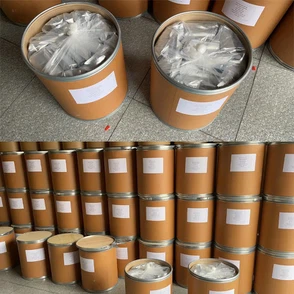
Products Package
100g/bag, 250g/bag, 500g/bag, 1000g/bag, 10kg/box or 25kg/barrel, provide packaging according to your needs.
FAQ
Q: Can I Get Free Sample?
Q: Can I Use My Own Sea Forwarder And Do FOB Term?
Q: How To Guarantee My Money And Product Quality?
Q: Can I get your COA,TDS and MSDS?
Q: Can you do the customized package?
Q: How long of the delivery time?
Q: How about the MOQ?
Q: How about the payment items?
Q: Can i visit your factory?
Q: Can you support us in the applications?
Q: Can you accept the inspection from a third party?
Q: Which country have you exported to?
Hot Tags: CAS 138261-41-3 Insecticide Pesticide Imidacloprid 70 wdg 70% wdg, China, suppliers, manufacturers, price, free sample, CAS NO 210880 92 5 Liquid Clothianidin Insecticide 20 sc 20 Sc, CAS NO. 135410-20-7, CAS NO 71751 41 2, CAS NO 54407 47 5 Insecticide Chlorempenthrin 95 Technical, CAS NO 66215 27 8 Insect Growth Regulator Insecticide Cyromazine 75 Wp, CAS NO 66215 27 8 Pesticide Fly Control Cyromazine 98