In the intricate world of plant biology, the role of auxin in regulating the growth of plant shoots under nutrient - rich conditions is a fascinating subject. As an auxin supplier, I have witnessed firsthand the profound impact of these hormones on plant development. In this blog, we will delve into the mechanisms by which auxin controls plant shoot growth in environments abundant with nutrients.
The Basics of Auxin
Auxins are a class of plant hormones that play a crucial role in various aspects of plant growth and development. They are involved in processes such as cell elongation, apical dominance, root initiation, and tropic responses. The most well - known auxin is indole - 3 - acetic acid (IAA), but there are also synthetic auxins like naphthaleneacetic acid (NAA) and 1 - naphthylacetamide (1 - NAD) that are widely used in agriculture and horticulture.

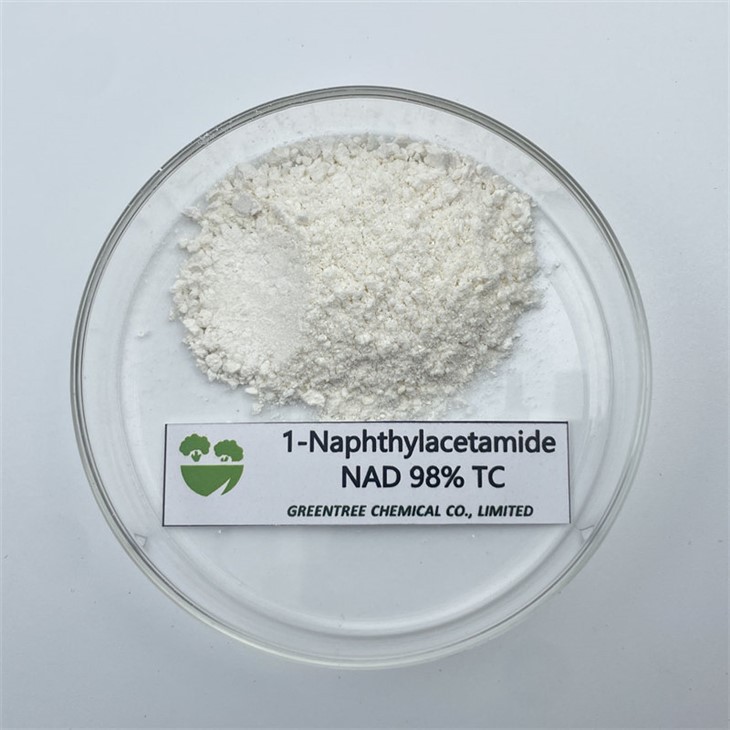
Our company offers high - quality auxin products, including 98%Tc Phytohormone Naphthaleneacetic Acid Naa CAS No. 86 - 87 - 3, CAS NO. 86 - 86 - 2 Plant Growth Hormone 1 - Naphthylacetamide 1 - NAD 98%, and Sodium 1 - Naphthylacetamide Acetic Acid 98%Tc Products 86 - 86 - 2 C12H11NO. These products have been carefully formulated to ensure optimal performance in promoting plant growth.
Auxin and Cell Elongation in Nutrient - Rich Conditions
One of the primary ways auxin regulates plant shoot growth is through the promotion of cell elongation. In nutrient - rich conditions, plants have an abundant supply of resources such as water, minerals, and carbohydrates. Auxin acts on the cell walls of plant cells, causing them to become more flexible and expand.
The acid - growth theory provides a possible explanation for this process. According to this theory, auxin stimulates the activation of proton pumps in the plasma membrane of plant cells. These proton pumps secrete hydrogen ions (H⁺) into the cell wall, lowering the pH. The acidic environment activates enzymes called expansins, which break the cross - links between cellulose microfibrils in the cell wall. As a result, the cell wall becomes more extensible, and water can enter the cell, causing it to expand.
In nutrient - rich conditions, the availability of water and nutrients provides the necessary building blocks for cell expansion. Auxin acts as a signal to trigger this process, ensuring that the plant shoots grow rapidly and efficiently. For example, in a greenhouse with high - quality soil and regular fertilization, the application of auxin can significantly enhance the elongation of plant shoots, leading to taller and more vigorous plants.
Apical Dominance and Auxin in Nutrient - Rich Environments
Apical dominance is another important aspect of plant shoot growth regulated by auxin. In a plant, the apical bud at the tip of the shoot produces auxin, which is transported downwards through the stem. This auxin inhibits the growth of lateral buds, ensuring that the plant's resources are focused on the main shoot.
In nutrient - rich conditions, the plant has more resources to allocate. However, the apical dominance mechanism still plays a crucial role. The high levels of auxin produced by the apical bud prevent the lateral buds from growing, allowing the plant to maintain a single, dominant shoot. This is beneficial for the plant as it can compete more effectively for light and space.
Our auxin products can be used to manipulate apical dominance. By applying synthetic auxins to the apical bud or the stem, we can enhance the inhibitory effect on lateral buds, promoting a more upright and compact growth habit. On the other hand, if we want to encourage branching, we can use auxin inhibitors or apply auxin to the lateral buds to counteract the apical dominance.
Auxin and Tropic Responses in Nutrient - Rich Conditions
Tropic responses are the directional growth movements of plants in response to external stimuli such as light (phototropism) and gravity (gravitropism). Auxin plays a key role in these responses.
In phototropism, when a plant is exposed to unilateral light, auxin accumulates on the shaded side of the shoot. This causes the cells on the shaded side to elongate more than the cells on the illuminated side, resulting in the bending of the shoot towards the light. In nutrient - rich conditions, the plant has the resources to support this growth response. The availability of nutrients ensures that the cells can expand rapidly in response to the auxin gradient.
Gravitropism is another important tropic response. When a plant is placed horizontally, auxin accumulates on the lower side of the shoot. This promotes cell elongation on the lower side, causing the shoot to bend upwards against gravity. In a nutrient - rich environment, the plant can quickly adjust its growth direction to optimize its access to light and other resources.
The Interaction between Auxin and Nutrients
The relationship between auxin and nutrients is complex and bidirectional. On one hand, auxin can influence the uptake and distribution of nutrients in the plant. For example, auxin can stimulate the growth of roots, which in turn increases the surface area for nutrient absorption. In nutrient - rich conditions, the enhanced root growth promoted by auxin allows the plant to take up more nutrients efficiently.
On the other hand, nutrients can also affect the synthesis and action of auxin. For instance, nitrogen is an essential nutrient for plant growth. Adequate nitrogen levels can promote the synthesis of auxin in the plant. In a nutrient - rich soil with high nitrogen content, the plant may produce more auxin, leading to increased shoot growth.
Applications of Auxin in Nutrient - Rich Agriculture
In modern agriculture, the use of auxin in nutrient - rich conditions has numerous applications. In fruit production, auxin can be used to prevent fruit drop and promote fruit growth. By applying auxin to the fruit - bearing trees in a well - fertilized orchard, we can ensure a higher yield of high - quality fruits.
In vegetable cultivation, auxin can be used to enhance the growth of seedlings. In a greenhouse with a nutrient - rich growing medium, the application of auxin can accelerate the development of seedlings, allowing them to be transplanted earlier and resulting in a longer growing season.
Conclusion
In conclusion, auxin plays a vital role in regulating the growth of plant shoots in nutrient - rich conditions. Through its effects on cell elongation, apical dominance, tropic responses, and nutrient interaction, auxin ensures that plants can grow rapidly and efficiently in environments with abundant resources.
As an auxin supplier, we are committed to providing high - quality auxin products that can help farmers and horticulturists achieve better plant growth. If you are interested in learning more about our auxin products or have any questions regarding their application, please feel free to contact us for a procurement discussion. We look forward to working with you to enhance the growth and productivity of your plants.
References
- Taiz, L., & Zeiger, E. (2010). Plant Physiology. Sinauer Associates.
- Davies, P. J. (2013). Plant Hormones: Biosynthesis, Signal Transduction, Action! Kluwer Academic Publishers.
- Salisbury, F. B., & Ross, C. W. (1992). Plant Physiology. Wadsworth Publishing Company.