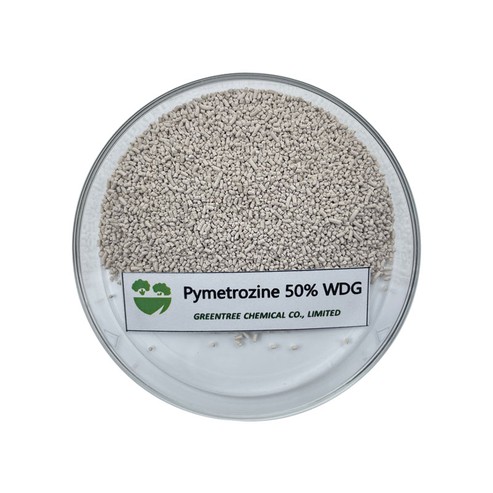
Aphids, planthoppers, and whiteflies harm crops by sucking plant sap, secreting honeydew, spreading viruses, and causing diseases, leading to poor crop growth, reduced yield, and lower quality. The insecticide we're sharing today is specifically designed to control these pests. Its unique mechanism of action can stop pests from feeding within hours. This is pymetrozine.
Pymetrozine mechanism of Action
When piercing-sucking pests such as aphids and planthoppers feed on plant sap containing pymetrozine, the pesticide quickly enters their bodies. It specifically acts on the muscles at the base of the pest's stylet, affecting its movement and inhibiting its piercing behavior, preventing it from properly penetrating plant tissue to suck sap. Even if the pest manages to briefly penetrate, the obstructed stylet movement prevents it from continuing to feed. Although pests do not die immediately after contact with the pesticide, the cessation of feeding significantly reduces their damage to crops within a short period. Ultimately, the pests will die from starvation within the next 2-3 days, achieving the goal of pest eradication.
Pymetrozine Product Features
(1) Broad Insecticidal Spectrum: Pymetrozine can be used on various crops such as wheat, cotton, rice, vegetables, and fruit trees. It has excellent control effects on almost all types of piercing-sucking pests, such as wheat aphids, cotton aphids, peach aphids, gray planthoppers, brown planthoppers, and greenhouse whiteflies. Generally, pests will stop feeding 2-3 hours after application, effectively controlling and reducing the damage caused by pests to crops.
(2) Strong Systemic Properties: Pymetrozine can be rapidly absorbed by the roots, stems, and leaves of crops and undergoes bidirectional translocation within the plant. After absorption through the roots, the pesticide can be transported upwards to all parts of the plant; after spraying from the leaves, it can also be translocated within the leaves and diffuse upwards and downwards. Even when pests feed on the underside of leaves or inside stems, they can still come into contact with the pesticide, thus achieving comprehensive control.
(3) No cross-resistance: Due to its unique mechanism of action, pymetrozine differs from conventional neonicotinoid, organophosphate, and pyrethroid insecticides, exhibiting no cross-resistance with other traditional insecticides. During pest control, the rational use of pymetrozine can effectively delay the development of pesticide resistance in pests, extend the pesticide's lifespan, and ensure long-term stable control effects.
(4) High safety: Pymetrozine is relatively safe for the environment and non-target organisms. At normal application doses, it is relatively safe for some natural enemy insects such as ladybugs and lacewings, and has minimal impact on mammals and birds. Furthermore, it has a certain degree of degradability in soil and water, making it difficult to accumulate in the environment. In addition, at recommended application concentrations, it does not cause phytotoxicity and is safe for crops.
Pymetrozine Applicable Crops and Target Pests
Grain Crops: Rice can control rice planthoppers and rice leafhoppers; wheat can control wheat aphids and wheat leafhoppers; corn can control corn aphids and other pests.
Cash crops: Control of cotton aphids and cotton leafhoppers.
Vegetables: Control of whiteflies and aphids in crops such as cucumbers and tomatoes.
Fruit trees: Control of piercing-sucking pests such as psyllids and aphids in citrus trees and aphids in apple trees.