According to a survey of the main producing areas of spring soybeans in Northeast China and Huanghuai Haixia soybeans in 2021, there are currently three main methods of weed control in soybean fields:
1. A single weeding plan, generally adopts the soil sealing treatment method, and seals the land with acetochlor and mecitrione compounded with 2,4-D-butyl ester before the emergence of soybeans after sowing, and selects the plots with serious hazards in soybean fields. Metrimetrione combined with thifensulfuron-methyl is used to control weeds, and when there are too many weeds, the blocking agent is also used to add glyphosate to treat;
2. Two times of weeding plan. In the case of poor closed treatment effect, the second weeding after soybean emergence is generally adopted, and stems and leaves such as fomesafen, nicosulfuron, bentazone and clethodim are generally applied. treatment of herbicides;
3. Multiple weeding schemes, after emergence, apply fomesafen and bentazone several times according to the growth of weeds. It is more common for farmers to take weeding operations twice or more, accounting for more than 60% (more than 10% of them more than three times).

It is estimated that by 2030, on the basis of the glyphosate-resistant and glufosinate-ammonium-resistant traits that have obtained transgenic safety certificates, stress-resistant traits such as resistance to lepidopteran pests, coleopteran pests, and drought tolerance may be gradually introduced.
According to the historical trend of the development of soybean varieties and pesticides in key global countries such as the United States, the introduction of these traits that have a major impact on the production process is expected to have an important impact on the amount of pesticides used in soybeans in China and the herbicides used in soybeans in China. The product structure has a significant impact.

The specific impact and analysis are as follows:
1. By 2025, the utilization of China's existing pesticide production capacity for soybeans will be relatively stable, and there will be basically no idle production capacity of related pesticides and selective herbicides due to the liberalization of commercial planting of genetically modified soybeans, and fungicides and plant growth. The dosage of regulators also remained basically stable.
According to the extrapolation forecast based on data such as the Phillips McDougall report, it is estimated that by 2025, the market value of soybean herbicides in China will be 200 million to 210 million US dollars, the market value of insecticides will be 35 million to 40 million US dollars, and the market value of fungicides will be 50 million to 0.6 million US dollars. million US dollars, and the market value of plant growth regulators is US$10 million to US$2 million.

2. From 2026, it is expected that the commercial planting of genetically modified soybeans in China will develop rapidly, and it is estimated that the coverage rate may increase by 8% to 10% per year to 50% to 60%. Pesticides for soybean planting will undergo certain changes.
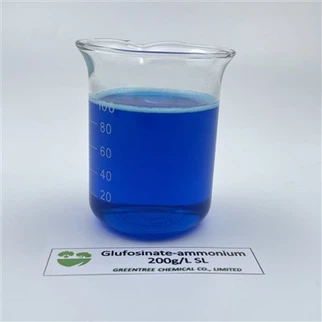
(1) In terms of herbicides, it is estimated that by 2030, the amount of glyphosate used for soybeans in China will increase by 500% to 800% compared with 2021, and the amount of glufosinate-ammonium will also increase by the same order of magnitude.
At present, the main herbicides used in soybean planting are quizalofop-p, fomesafen, acetochlor, haloxyfop, clethodim, bentazone, clomazone, imazethapyr, thifensulfuron, Pyridine, mecitrione, metolachlor, trifluralin, fluazifop-p-ethyl, fluoxachlor propargyl, fenoxaprop-p-p-p, propachlor, promethazine, alachlor, The demand for imazethapyr and others will decrease, and the usage is expected to be more than 30% lower than that in 2021. The market value of herbicides for soybeans in 2030 is 160 million to 180 million US dollars.
(2) In terms of insecticides, with the introduction of Bt traits more fully, the harm of Lepidoptera and Coleoptera insects to soybeans will decrease. It is more than 30% lower than that in 2021, and 2030 will be the lowest valley of soybean pesticides.
The amount of insecticides used to control other pests such as soybean aphids will increase compared with the current level. Market share of products such as Bacillus thuringiensis, lambda-cyhalothrin, trichlorfon, deltamethrin, chlorpyrifos, fenvalerate, malathion, carbofuran, imophos, and chlorantraniliprole will gradually decrease. It is estimated that the market value of insecticides for soybeans will be US$20 million to US$30 million in 2030.
(3) Since there are currently no genetically modified crops with large-scale disease resistance traits, the impact of the planting of genetically modified crops on the fungicide market is relatively limited. At the same time, due to the increase in the unit output value of soybeans, producers will use fungicides and plant growth regulators to further ensure production and improve quality. The amount of fungicides and plant growth regulators used in soybean planting is expected to increase. The market value of soybean fungicides is US$60 million to US$80 million, and the consumption of plant growth regulators is estimated to be US$20 million to US$4 million.