CPPU, or forchlorfenuron, is a well - known plant growth regulator that has been widely used in the agricultural industry. One of the frequently asked questions about CPPU is whether it is a natural or synthetic compound. In this blog, as a CPPU supplier, I will delve into this topic and provide a comprehensive analysis.
Understanding the Basics of CPPU
CPPU belongs to the class of cytokinins, which are plant hormones that play crucial roles in various plant growth and development processes, such as cell division, shoot and root growth, and fruit development. Cytokinins can be classified into natural and synthetic types. Natural cytokinins are produced within plants and are involved in the normal physiological processes of the plant. Synthetic cytokinins, on the other hand, are chemically synthesized in laboratories and are designed to mimic the effects of natural cytokinins.
The Synthetic Nature of CPPU
CPPU is a synthetic compound. It was first synthesized in the laboratory and is not found naturally in plants. The chemical structure of CPPU is specifically engineered to have strong cytokinin - like activity. This synthetic nature allows for precise control over its production and properties.
The process of synthesizing CPPU involves a series of chemical reactions. Chemists use specific starting materials and follow well - defined reaction pathways to create the compound. This precision in synthesis means that the purity and quality of CPPU can be tightly controlled, which is essential for its use in agriculture.
Advantages of Synthetic CPPU
As a synthetic compound, CPPU offers several advantages over natural cytokinins. Firstly, its production can be scaled up to meet the large - scale demand in the agricultural market. Since it is synthesized in a laboratory, the production is not limited by the availability of natural resources or the growth cycle of plants.
Secondly, synthetic CPPU has a more stable chemical structure compared to some natural cytokinins. This stability ensures that it can be stored for longer periods without significant degradation, which is important for its transportation and use in different regions.
Thirdly, the activity of synthetic CPPU can be fine - tuned. Scientists can modify its chemical structure to enhance its cytokinin - like effects, making it more effective in promoting plant growth and increasing fruit set. For example, in fruit production, CPPU can significantly increase the size and quality of fruits, such as grapes and kiwifruits.
Comparison with Natural Cytokinins
Natural cytokinins, such as trans - zeatin, are also important for plant growth. Trans - zeatin is a naturally occurring cytokinin that is involved in many plant physiological processes. You can find more information about C10H13N5O 99% Trans - zeatin Plant Growth Regulator Raw Material.
Natural cytokinins are produced by plants in response to various environmental stimuli and developmental cues. They are an integral part of the plant's natural regulatory system. However, the extraction of natural cytokinins from plants can be a complex and costly process. Moreover, the yield of natural cytokinins from plants is often limited.
In contrast, synthetic CPPU can be produced in large quantities at a relatively low cost. This makes it a more practical option for large - scale agricultural applications.
Applications of CPPU in Agriculture
CPPU has a wide range of applications in agriculture. It is commonly used to increase the set of fruit. By applying CPPU to fruit trees, farmers can significantly increase the number of fruits that develop on the tree. This leads to higher yields and better economic returns.
For example, in grape production, Plant Hormone Forchlorfenuron Cppu 99 Tc for Increasing The Set of Fruit can be used to promote the development of larger and more uniform grapes. It can also be used in kiwifruit production to increase the size and weight of the fruits.
In addition to fruit production, CPPU can also be used to promote the growth of vegetables. It can enhance the growth rate of leafy vegetables and improve their quality.
Safety and Regulatory Aspects
When it comes to the use of synthetic compounds like CPPU in agriculture, safety is a major concern. However, extensive research has been conducted on the safety of CPPU. Regulatory agencies around the world have established strict guidelines for its use.
When used according to the recommended dosage and application methods, CPPU is considered safe for both plants and humans. It is important for farmers and agricultural workers to follow these guidelines to ensure the proper and safe use of CPPU.
Other Related Synthetic Plant Hormones
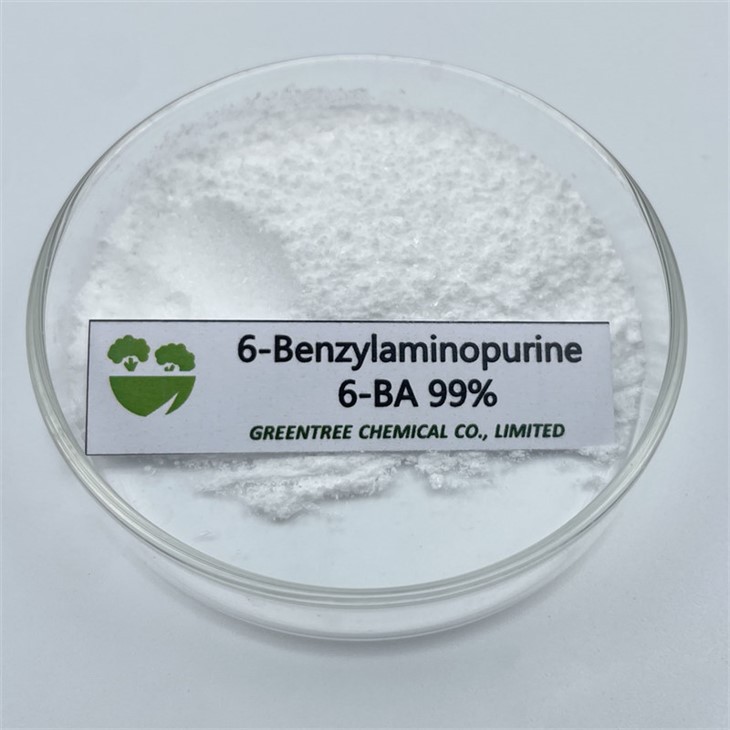
In addition to CPPU, there are other synthetic plant hormones that are widely used in agriculture. One such hormone is benzylaminopurine (BAP). BAP is also a synthetic cytokinin and has similar effects to CPPU. You can learn more about CAS 1214 - 39 - 7 Plant Hormone Benzylaminopurine 6 - Benzylamino Purine 6 - BAP 6 - BA 6 - BAP 99 TC.
These synthetic plant hormones work together with natural plant hormones to regulate plant growth and development. They provide farmers with additional tools to optimize crop production and improve the quality of agricultural products.

Conclusion
In conclusion, CPPU is a synthetic compound. Its synthetic nature offers many advantages in terms of production, stability, and activity. While natural cytokinins are important for the normal growth of plants, synthetic CPPU provides a practical and effective solution for large - scale agricultural applications.
As a CPPU supplier, I am committed to providing high - quality CPPU products to meet the needs of farmers and agricultural businesses. If you are interested in purchasing CPPU or have any questions about its use, please feel free to contact me for further discussion and procurement negotiation.
References
- Davies, P. J. (Ed.). (2010). Plant Hormones: Biosynthesis, Signal Transduction, Action! Springer Science & Business Media.
- Taiz, L., & Zeiger, E. (2010). Plant Physiology. Sinauer Associates.