Thiocyclam is a nereistoxin-based insecticide with low to moderate toxicity. It acts as a neurotoxic agent, and its toxicological mechanism is similar to that of other nereistoxin insecticides. After entering the insect body, it is metabolized into nereistoxin, which exerts its insecticidal activity by binding to acetylcholine receptors and blocking nerve impulse transmission. As a result, affected insects become paralyzed and eventually die.
Thiocyclam exhibits both contact and stomach poisoning activity, and also possesses certain systemic and fumigant properties. In addition, it has ovicidal activity. Its toxic effect against Lepidopteran pests is relatively slow, and mildly poisoned insects may occasionally recover. Thiocyclam degrades rapidly within plants, resulting in a relatively short residual period of generally 7–14 days, with very low residue levels remaining in crops at harvest.
Thiocyclam is suitable for controlling a wide range of Lepidopteran, Coleopteran, and Hemipteran pests on crops such as rice, maize, vegetables, and fruit trees. However, some varieties of cotton, apple, and legumes are sensitive to Thiocyclam and should not be treated with this product.
Thiocyclam provides excellent control of both nymphs and adults of thrips and whiteflies, and also exhibits certain ovicidal activity with a rapid knockdown effect. As Thiocyclam is classified as a low- to moderately toxic insecticide, it is important to select appropriate crops and apply it at the proper timing in practical field use to maximize its performance and application value.
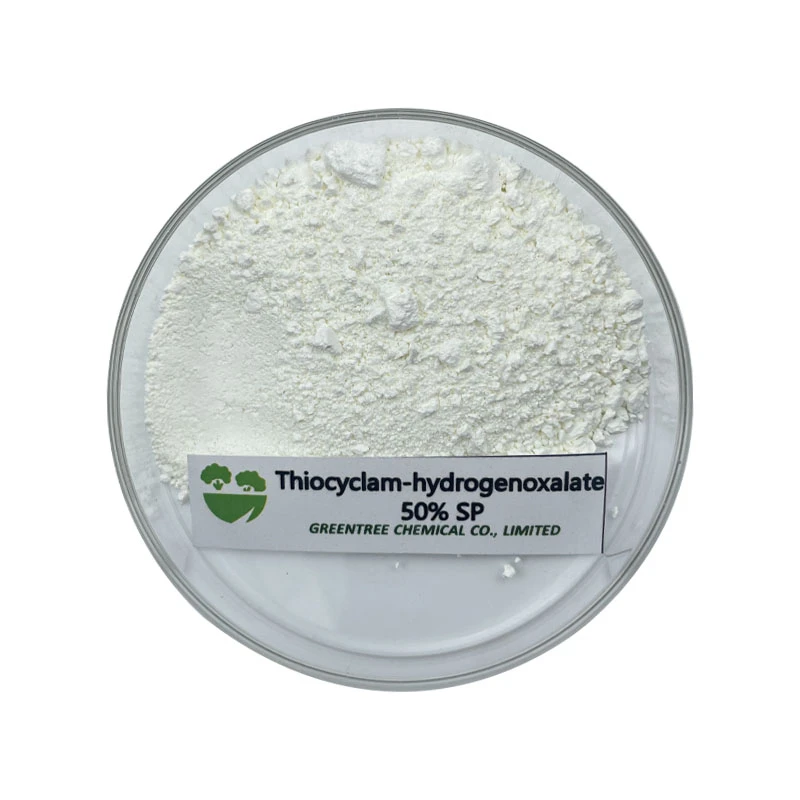
The insecticidal activity of Thiocyclam is relatively slow, and mildly poisoned insects may have the potential to recover. Therefore, mixing Thiocyclam with fast-acting insecticides to enhance knockdown performance will be an important direction for its future development and application.
Thiocyclam Applications
1.Mix 50 g of 50% Thiocyclam with approximately 1.5 L of water, then blend it with 10–15 kg of wheat bran (preferably roasted). Broadcast the bait around the crop roots to achieve effective control of crickets and snails.
2.Apply 750–1,500 g/ha of 50% Thiocyclam soluble powder diluted with water by drenching or coarse spraying. It is effective against rice stem borers (Scirpophaga incertulas and Chilo suppressalis) and rice leaf folders. For the first generation of stem borers, apply 7 days after the peak egg-hatching period.
3.At the whorl stage of maize, spray the whole plant with 50% Thiocyclam soluble powder diluted 1,500–2,000 times to control corn borers and corn aphids.
4.Spray 50% Thiocyclam soluble powder diluted 750–1,000 times to control Lepidopteran and Coleopteran pests on vegetables, including larvae of diamondback moths, cabbage white butterflies, and large white butterflies. The residual control period can last 7–14 days.
5.Dilute 50% Thiocyclam at a ratio of 1:750 and apply as a foliar spray. It provides effective control of snails in open-field vegetable production.
6.Apply a mixture of Spinosad 3% + Thiocyclam 30% at a rate of 225–300 mL/ha during the early infestation stage of cucumber thrips. This combination provides excellent control of thrips on cucumbers.
Thiocyclam Precautions
1.Thiocyclam is highly toxic to silkworms, has a relatively long residual activity, and possesses certain fumigant properties. In mulberry-growing and sericulture areas, special attention should be paid to application methods, and the product should be used with caution.
2.Leguminous crops and cotton are sensitive to Thiocyclam and should not be treated with this product.
3.For improved performance and resistance management, it is recommended to use Thiocyclam in combination or rotation with insecticides that have different modes of action.